
Why We Invested: CarbonBridge

Author: Brian Laung Aoaeh, CFA
Statement on the Use of Generative-AI and AI-Assisted Technologies
The author’s use of Generative-AI and other AI-Assisted Technologies in the writing process adheres to the CFA Institute’s Code of Ethics and Standards of Professional Conduct [Ethics and Artificial Intelligence in Investment Management : A Framework for Professionals, CFA Institute, 2022]
Table of Contents
Introduction
Modern Industrial Chemistry: The World Runs on Methanol
Understanding the Gas Fermentation Value Chain
The Problem: Waste Methane is an Enormous, Untapped Resource
The Problem: Conventional Gas Fermentation is Bottlenecked by Physics, Not Biology or Chemistry
CarbonBridge: Modular Bioreactors That Deliver Gas Directly to the Microbe
The Innovation: Direct-Delivery Gas Fermentation and What 600% Greater Productivity Means
Meet the Team: Engineers Who Understand Both the Hardware and the Biology
Why Decentralized, Modular Biomanufacturing Is the Future of Industrial Chemistry
Where Does Disruption Come From: Buy-Side Innovation & Sell-Side Innovation
Addressing The Elephant in the Room: BioManufacturing & BioTech Investments
Conclusion: We Are #ObsessivelyEnthusiastic
TL;DR
CarbonBridge is a biotechnology and biomanufacturing startup that is revolutionizing industrial chemistry through modular, gas-to-microbe bioreactors that deliver significant productivity increases and cost savings by supplanting traditional, inefficient gas fermentation processes; A 98% reduction in cost and a 600% productivity increase.
Introduction: What is Industrial Chemistry and Why Should You Care?
The war between the United States and Israel, and Iran has reminded us yet again of how much of modern life depends on chemicals derived from fossil fuels. In the infographic Products Made From Oil and Natural Gas, authors from the United States’ Department of Energy state, “Petrochemicals derived from oil and natural gas make the manufacturing of over 6,000 everyday products and high-tech devices possible. Major petrochemicals—including ethylene, propylene, acetylene, benzene, and toluene, as well as natural gas constituents like methane, propane, and ethane—are the feedstock chemicals for the production of many of the items we use and depend on every day.”
On its Science and Engineering Hub, Wiley defines Industrial Chemistry as “. . . a branch of chemistry that focuses on the practical application of chemical principles and processes in various industries, such as manufacturing, pharmaceuticals, petrochemicals, and agriculture. It involves the production of chemicals, fuels, materials, and other products on a large scale using chemical reactions, engineering principles, and technology to meet the needs of society and businesses. Industrial chemists work to optimize processes, improve efficiency, develop new products, and ensure safety and environmental sustainability in industrial settings.”
On its website, Ace Laboratories defines Industrial Chemistry as “ . . . the process of transforming matter into materials that are useful to humanity through chemical processes.” For example, the transformation of natural rubber into tires is a result of industrial chemistry.
As the world seeks to transition away from fossil fuels and towards alternative sources of energy, there’s a growing search for bio-based alternatives and a concurrent effort to improve the efficiency of current fossil fuel based systems in order to substantially reduce the intensity of greenhouse gas emissions associated with the production of these chemicals which serve as feedstock for so many other industries.
Modern Industrial Chemistry: The World Runs on Methanol
According to OPIS, a Dow Jones Company, “Methanol is one of the most essential commodity chemicals used in global chemical synthesis, serving as a fundamental building block for a wide range of downstream products that touch nearly every aspect of modern life.” Additionally, “Beyond chemical production, methanol is also used as a biodiesel component, a gasoline blendstock, a boiler fuel, and—as seen in mainland China, as a transportation fuel in blends ranging from M5 to M100.” M5 is a blend of 5% methanol and 95% gasoline, while M100 is pure 100% methanol.
Methanol is produced from methane.
In How much methane do human activities put in the atmosphere? the MIT Climate Portal Writing Team states that, “Methane—or CH4—is a greenhouse gas: it traps the sun’s energy and keeps it from radiating back into space, warming the Earth. And though methane sticks around in the atmosphere for only about seven to 12 years, it is a potent atmospheric warmer during that time. In the first 20 years after it enters our atmosphere, methane will trap around 84 times more heat, pound for pound, than carbon dioxide (CO2), the best-known greenhouse gas.” Adding that human activities have led to a spike in the amount of methane released into the atmosphere over the past 150 years.
They quote Desirée Plata, School of Engineering Distinguished Climate and Energy Professor, and Director of the MIT Methane Network, “The tricky thing about methane is that the more methane that's released and the hotter the planet gets, the more methane is emitted from traditionally natural sources like wetlands and inland water.”
In Global Methane Budget 2000 - 2020 (2025), the authors publish a bottom-up estimate of the amount of methane produced each year of between 540 and 865 million metric tons, with a mean of 685. Their top-down estimate is between 581 and 627 million metric tons, with a mean of 608.
The authors of Human activities now fuel two-thirds of global methane emissions state that top-down measures of methane emissions suggest that human activity accounts for 65% of global emissions.
Using those two sets of estimates, we can conclude, roughly, that human activity accounts for between 350 and 562 million metric tons of methane emissions each year, with a mean of 445, on a bottom-up basis. While the equivalent emissions on a top-down basis are between 378 and 408 million metric tons, with a mean of 395.
Commenting on the seeming lack of precision in published data on measurements of methane emissions, MIT’s Plata states that “Scientists don’t try to force these measurements to agree with each other, but use them to understand if their breakdown of different methane sources is realistic.”
Although methane can be converted into other chemicals, it is preferable to convert it to methanol first because methanol is easier to handle, store, and transport at normal temperatures. Handling, storing, and transporting methane requires cryogenic equipment. Methane is a volatile gas at ambient temperature, and storing and transporting it in liquid form requires the use of specialized cryogenic equipment.
This raises the question; How does one produce methanol from methane? Though, before answering that question perhaps it’s worth asking if solving that problem could lead to a business opportunity.
In Methanol Market (2025 - 2030), Grandview Research estimates that, “The global methanol market size was estimated at USD 38.50 billion in 2024 and is anticipated to reach USD 64.14 billion in 2030, growing at a CAGR of 9.1% from 2025 to 2030. The increase in methanol consumption to produce dimethyl ether and methyl tert-butyl ether (MTBE), which serve as alternatives to gasoline, is a significant factor contributing to this trend.”
Verified Market research reaches a similar conclusion in its Methanol Market Size And Forecast, stating that the “Methanol Market size was valued at USD 34.52 Billion in 2024 and is projected to reach USD 42.19 Billion by 2032, growing at a CAGR of 2.80% from 2026 to 2032.”
Research Nester arrives at somewhat similar conclusions in its Methanol Market Outlook.
Methanol is considered a “platform chemical” because it serves as a versatile feedstock for many downstream products. For example, in Going Green at Sea: Maersk’s Methanol Moment which ran on Maritime Gateway on May 20, 2026, Kalpana Pandey writes about Maersk’s initiative to decarbonize its container shipping fleet by introducing dual-fuel vessels that operate on methanol and conventional marine fuels. In the article, Pandey states “The delivery comes at a moment of heightened regulatory pressure on the shipping industry. The IMO’s Carbon Intensity Indicator (CII) framework, which came into force in 2023, requires vessels to demonstrate continuous improvement in their emissions efficiency ratings or face operational restrictions. The European Union’s Fuel EU Maritime regulation, which began phasing in from 2025, sets progressively tighter limits on the greenhouse gas intensity of fuels used by ships calling at EU ports.”
The increasing demand for methanol is summarized in Market Growth Reports’ Market Research Report on Methanol, where the authors state “Globally, methanol production reached an estimated 115.90 million tons in 2025 according to one authority, reflecting expansion of large capacity projects worldwide. The global methanol capacity base was forecast to expand by roughly 25% between 2025 and 2030, driven by investment in new plants and expansions. The methanol market sees widespread use in chemical feedstock chains, fuel blending, and emerging energy applications.” On April 15, 2024, Reuters reported that Singapore is aiming to supply over 1 million metric tons of low-carbon methanol annually by 2030 to meet rising demand for alternative bunker fuel.
This makes the methane-to-methanol conversion process a reasonable beachhead for a startup building a platform that could serve suppliers and customers in that market.
Understanding the Gas Fermentation Value Chain
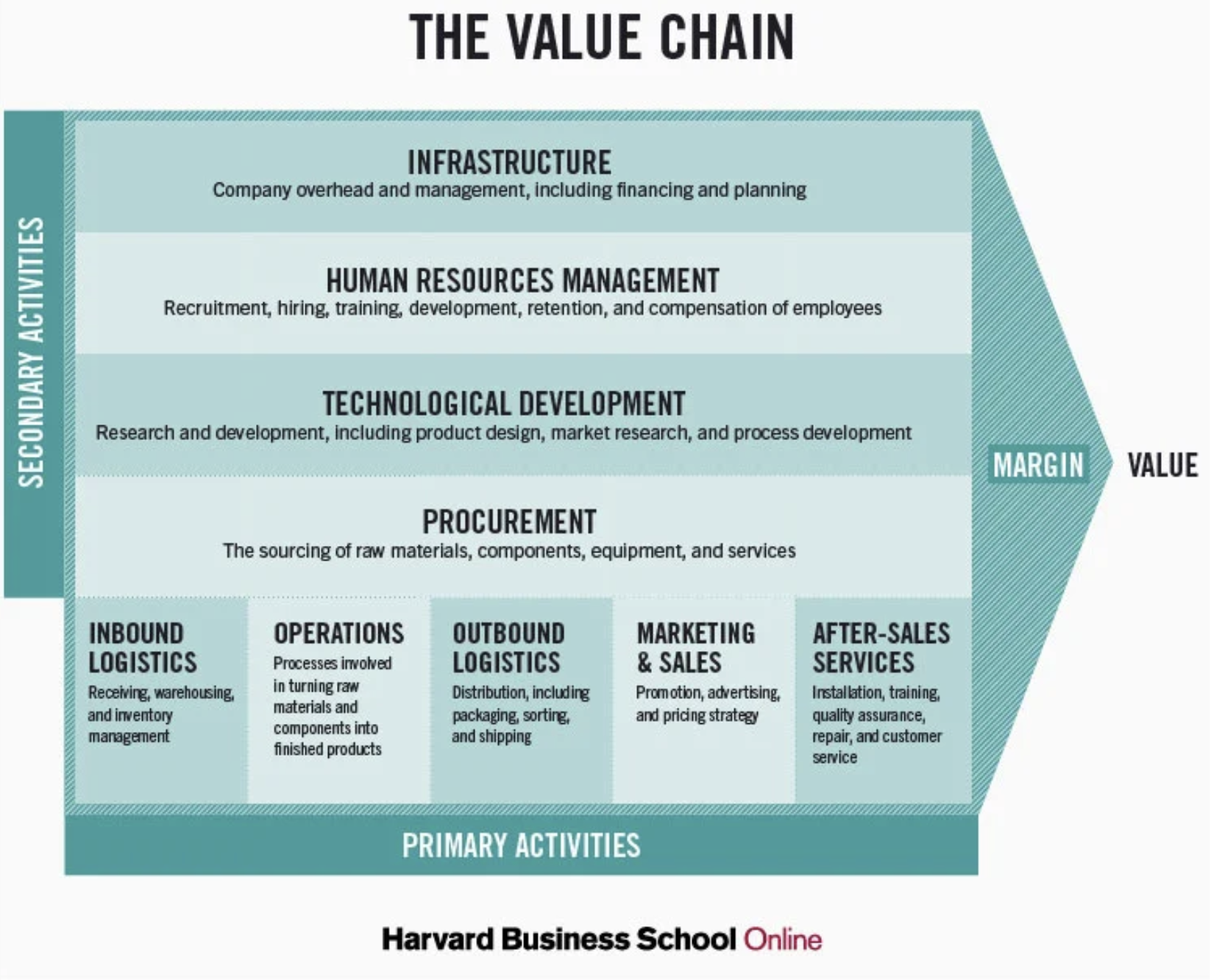
In simple terms, a value chain is the organizing mechanisms and systems that a single company relies on as it creates and delivers value to its customers. The term was coined by Michael Porter in his book, The Competitive Advantage: Creating and Sustaining Superior Performance. The image below summarizes the concept.
A detailed explanation of value chains is beyond the scope of this article. The relevant point is that companies that seek to convert methane into methanol for their internal operations or for sale to a customer can keep producing methanol the way it has been produced in the past, or they can seek alternatives.
The methanol value chain spans from upstream raw material sourcing (natural gas, coal, or biomass) through catalytic synthesis into methanol, and ends with diverse downstream applications.
This raises the question, how is methane converted to methanol?
In Recent Advances in the Catalytic Conversion of Methane to Methanol: From the Challenges of Traditional Catalysts to the Use of Nanomaterials and Metal-Organic Frameworks, the authors state “The conversion of methane into methanol is normally carried out through direct and indirect pathways. While through an indirect route, via a two-step procedure, methanol is formed by a catalytic reaction from syngas (CO + H2), which is produced via oxidation or steam reforming of methane, methane can also be directly converted to methanol through a direct route. Since steam reforming is a thermodynamically unfavorable reaction due to its intrinsic endothermic nature and therefore is immensely energy intensive, the indirect route may not be the best option, especially when it comes to industrial applications.”
For this reason, direct conversion of methane to methanol has become the focus of recent research. However, the authors point out that this approach isn’t without its own unique drawbacks. As they put it, “In general, there are several challenges to the direct conversion of methane to methanol. One is the strong C-H bond in methane, which requires severe conditions such as high temperatures to be cleaved. Due to high costs, this issue questions the industrial applicability of the process. Moreover, it causes the overoxidation of the produced methanol to produce more thermodynamically favorable products such as carbon monoxide and dioxide. The reason for this phenomenon is that the dissociation energy of the C-H bond in methanol is lower than that of methane. In other words, as the temperature increases, methanol is more susceptible to oxidation than methane. Consequently, the selectivity for the formation of methanol will decrease due to the generation of other products.”
This poses an obstacle to efficiently scaling the production of methanol.
However, this is a problem that has been solved elegantly in nature, and that has been documented and researched. For example, in Enzymatic Oxidation of Methane by Sarah Sirajuddin and Amy C. Rosenzweig in Biochemistry (2015), the authors state “Methane monooxygenases (MMOs) are enzymes that catalyze the oxidation of methane to methanol in methanotrophic bacteria. As potential targets for new gas-to-liquid methane bioconversion processes, MMOs have attracted intense attention in recent years.”
We will return to this later.
The Problem: Conventional Gas Fermentation is Bottlenecked by Physics, Not Chemistry or Biology
In simple terms, gas fermentation is the conversion of gases into other materials by microbes. Traditionally this is accomplished by pumping gas into a very large tank containing microbes suspended in a liquid. The conversion from gas to other materials happens because the microbes “eat” the gas and produce the desired materials as the output.
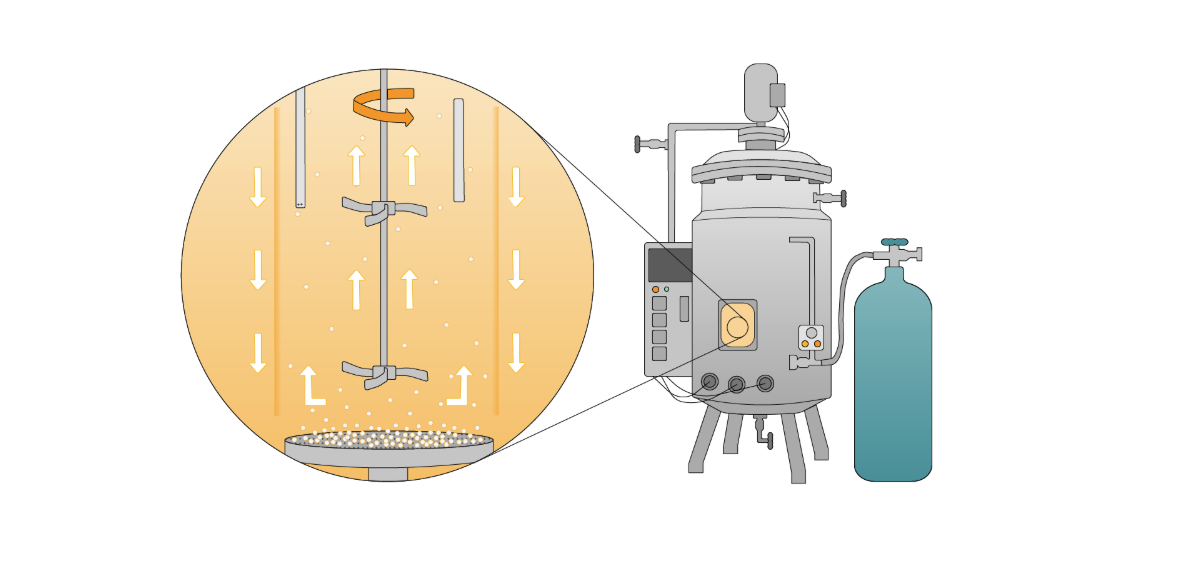
Dissolving a gas into a liquid is an inefficient process, requiring significant amounts of energy in order to enable the molecules of the gas and the liquid to mix adequately. The solubility of gases in liquids is governed by Henry’s Law, which states that the concentration of gas dissolved in a liquid increases with pressure.
There’s ample documentation of the disadvantages associated with traditional approaches to gas fermentation: For example:
In Bioreactors, gas delivery systems and supporting technologies for microbial synthesis gas conversion process in Bioresource Technology Reports (Volume 7, September 2019) the authors state that the “Main issues that hinder the scale-up and commercialization of the technology include poor gas-liquid mass transfer (GLMT), low productivities and high separation costs. Among these, poor GLMT remained a key bottleneck since syngas is supplied into the reactor in the form of dispersed bubbles and dissolved into the medium,” and “Stirred tank reactors (STR) are mainly adopted for scale-up of biological processes, but they are inefficient for syngas fermentation due to low gas hold-up and excessive power input for agitation.”;
In Membrane bioreactors for syngas permeation and fermentation in Critical Reviews in Biotechnology (Volume 42, 2022 - Issue 6) the authors state that “Mass transfer is usually limiting the syngas fermentation rate, due to the low aqueous solubilities of the gaseous substrates. Membrane bioreactors, as efficient gas–liquid contactors, are a promising configuration for overcoming this gas-to-liquid mass transfer limitation, so that sufficient productivity can be achieved,” and “Membrane bioreactors and the current industrial-scale gas-lift bioreactors should be compared on syngas fermentation potential. However, no full-scale process data or conceptual studies at comparable operational conditions (syngas composition, pH, and temperature), the scale of the reactor, and microbial strain are available, as the only current commercial process is owned and protected by LanzaTech.”;
In Evaluation of Gas Mass Transfer in Reactor for Syngas Fermentation in AIP Conference Proceedings 2085, 020008 (2019) the authors state that “The transfer of carbon monoxide and hydrogen from syngas to the microbes in a fermentation process occurs in a number of steps: (1) transfer of carbon monoxide and hydrogen from a syngas bubble into the fermentation liquid media, (2) transfer of the dissolved carbon monoxide and hydrogen from the fermentation liquid media to the microbes, and (3) uptake of the dissolved carbon monoxide and hydrogen by the microbes. One significant bottleneck during syngas fermentation is syngas-liquid mass transfer limitations due to the low solubility of the gaseous substrates carbon monoxide and hydrogen. Mass transfer limitation occurs when cells have the capacity to process more gas than the bioreactor can supply. The resistance of gaseous substrate diffusion at the gas-liquid interface was recognized as the limiting step in syngas fermentation. Gaseous substrate mass transfer limitation results in low cell concentration and low productivity, making it less economically feasible. Therefore, it is necessary to characterize the mass transfer of the reactor used for syngas fermentation to better understand how to overcome mass transfer limitations.”;
In Leveraging overpressure to improve gas conversion in Methylococcus capsulatus scale-up fermentations in Biotechnology and Bioprocess Engineering 31(3) (April 2026) the authors had to take additional safety precautions in their attempt to use elevated pressure as a strategy to overcome the gas transfer limitations that have already been discussed with respect to gas fermentation. They state “A systematic scale-up approach was employed, from 250 mL shake flasks through 1.5 L benchtop to a novel 7.5 L automated pressure stirred-tank reactor system with ATmospheres EXplosives (ATEX) certification. The pressure-controlled system enabled real-time dissolved oxygen tension (DOT)-controlled adjustment of headspace pressure, allowing independent optimization of gas transfer rates while maintaining process safety.” They add that “Gauge pressures up to 7 bar(g) significantly enhanced gas-liquid transfer, increasing gas utilization efficiency from 33% to 60% and biomass formation by 38% compared to atmospheric conditions. The DOT-controlled pressure strategy reduced oxygen limitation and maximized transfer rates. The developed pressure fermentation system successfully addressed key industrial scaleup challenges, including ATEX safety requirements, real-time process monitoring, and enhanced gas conversion efficiency.”
This raises the question; What if one could obviate the need to dissolve a gas in a liquid during gas fermentation? That’s where CarbonBridge comes in.
CarbonBridge: Modular, Scalable Bioreactors That Deliver Gas Directly to Microbes
CarbonBridge has developed small, modular, and highly scalable bioreactors that deliver gas directly to microbes, bypassing the need to dissolve gases in liquid solvents during gas fermentation.
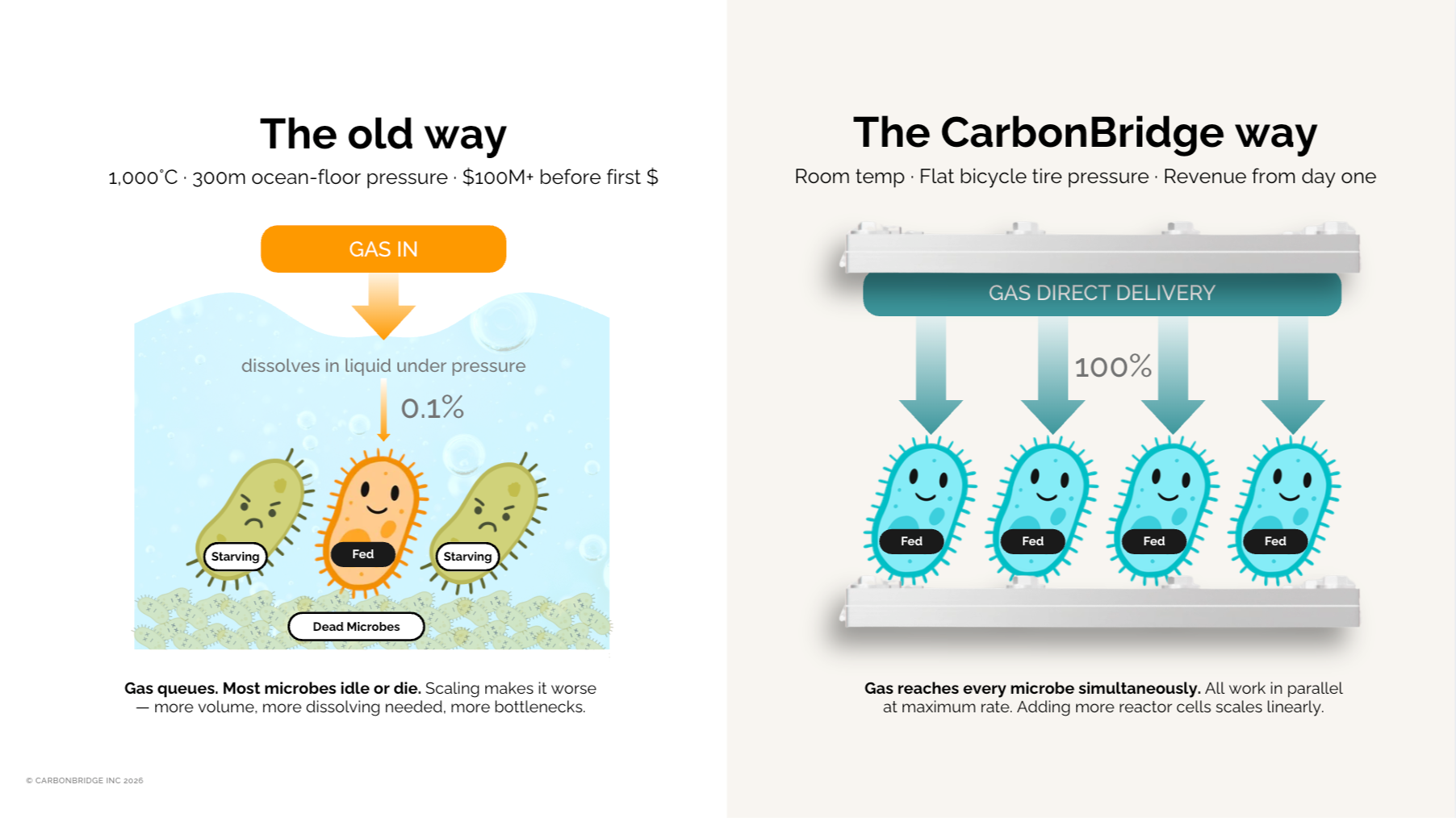
We believe this approach represents an architectural innovation as described by Rebecca Henderson and Kim Clark in Architectural Innovation: The Reconfiguration of Existing Product Technologies and The Failure of Established Firms, wherein CarbonBridge has changed the way core components of the gas fermentation process interact with one another while reinforcing the core design goal of converting gases into other high value materials by feeding the gases to microbes.
One might argue that incumbents ship modular bioreactors too. Those bioreactors are smaller versions of traditional bioreactors. In other words, these are smaller units of bioreactors in which gas is still dissolved in a liquid before microbes can eat the gas. Those modular bioreactors do not obviate the need to dissolve a gas in a liquid.
By contrast, CarbonBridge's small, modular, and highly scalable bioreactor does not suspend microbes in a liquid. The proprietary direct gas delivery system eliminates spargers, bubbles, agitators, and high pressures, making the gas mass transfer rate equal to the microbes' gas uptake rate.
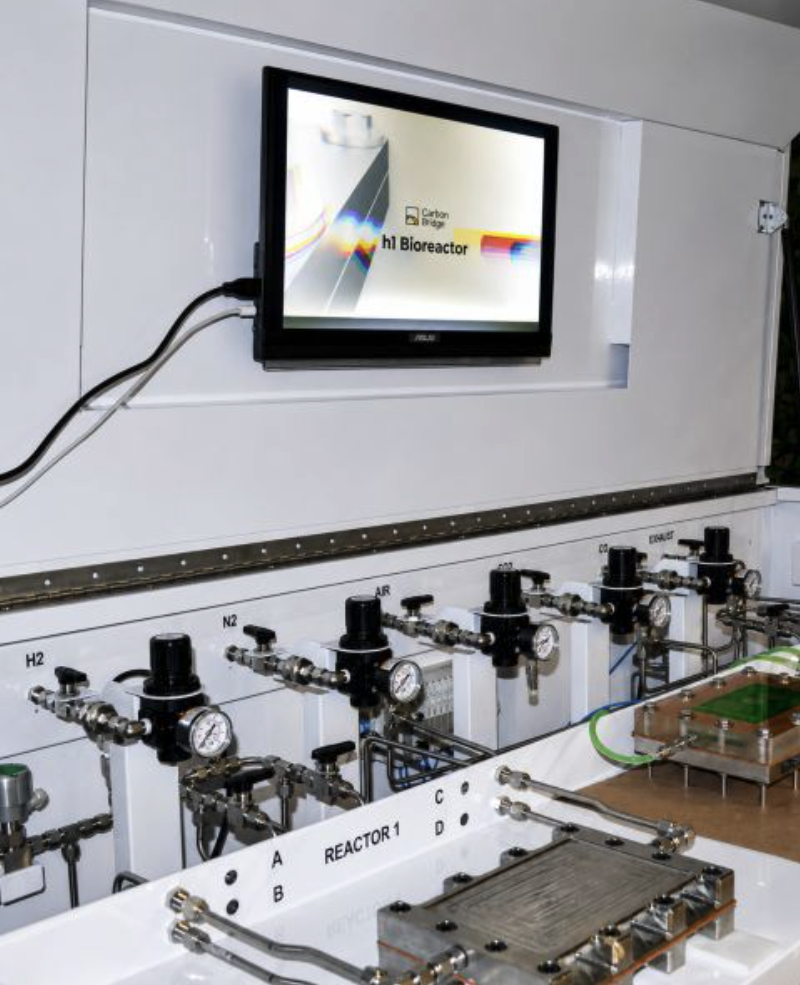
The Innovation: Direct-Delivery Gas Fermentation and What 600% Greater Productivity Means
CarbonBridge reports that its bioreactors have demonstrated the following advantages,
Significant cost efficiency: $200,000,000 for a traditional bioreactor compared to $4,500,000 for a shipping container-sized unit of CarbonBridge’s bioreactor. That’s a 98% reduction in capital expenditures for an equivalent unit.
Significant productivity increase: A 600% increase in productivity in comparison with traditional approaches. This happens because gas is delivered directly to microbes at room temperature, at pressure equivalent to the pressure of a flat bicycle tire. The traditional approach works at about 1,000 degrees celsius, and pressure of about 30 ATM - equivalent to the pressure at an ocean-depth of 300 meters or 435 pounds per square inch.
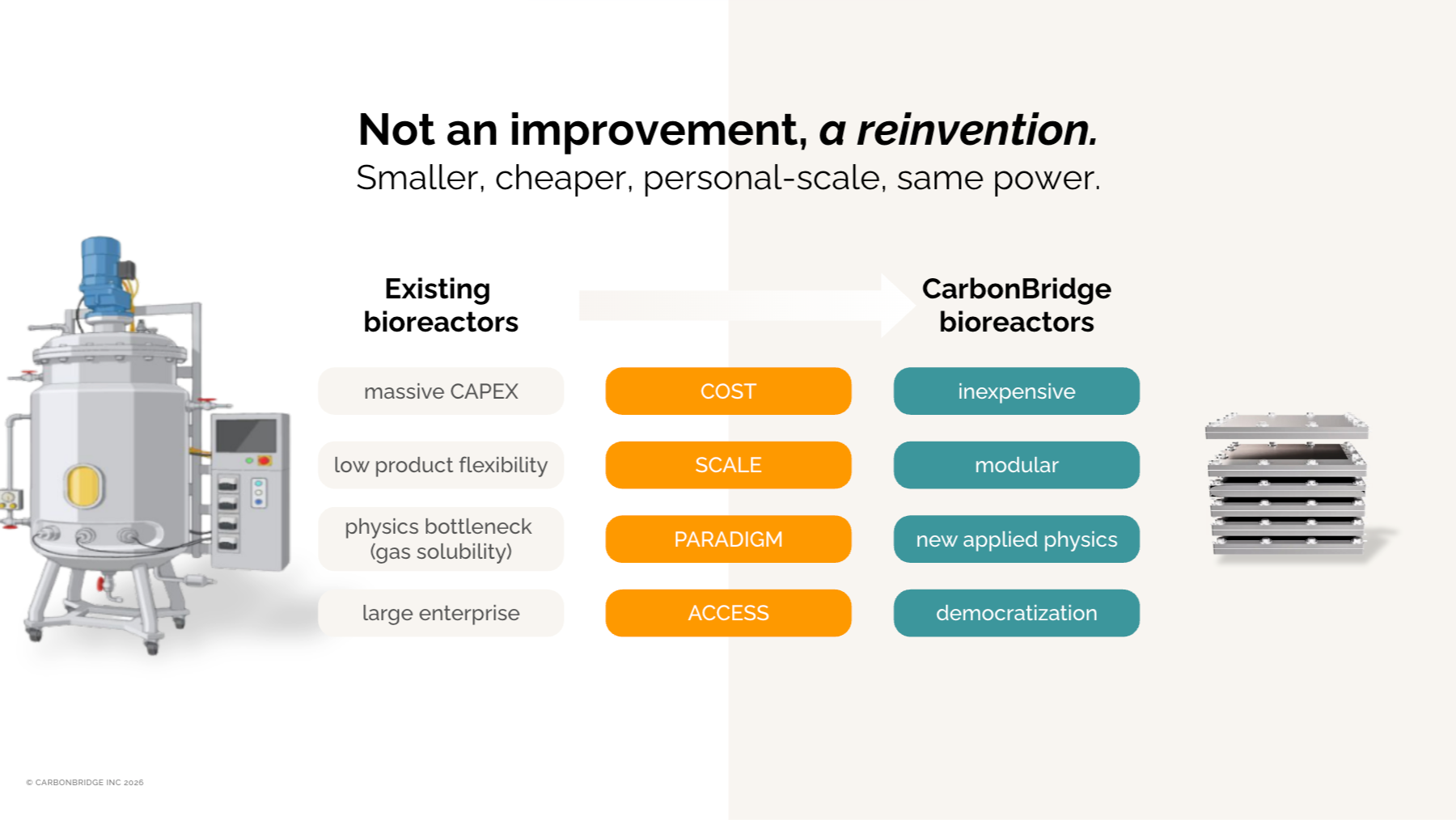
Moreover, CarbonBridge’s customers can be set-up and running much more quickly than normal because the equipment and parts that complement CarbonBridge’s bioreactors can all be obtained off the shelf. This means that CarbonBridge’s units can be built to order quite easily, and the cost of maintaining them is rather inexpensive compared to the alternative.
Additionally, CarbonBridge enables a Bring-Your-Own-Bug approach in which its customers can develop their own proprietary microbes for use with the hardware that CarbonBridge has developed. Since the system is compatible with whatever gas a customer wishes to use as an input, CarbonBridge offers its customers many more options that they can find elsewhere; The same equipment works for whatever microbe and gas combinations a customer might wish to use in developing end-use products.
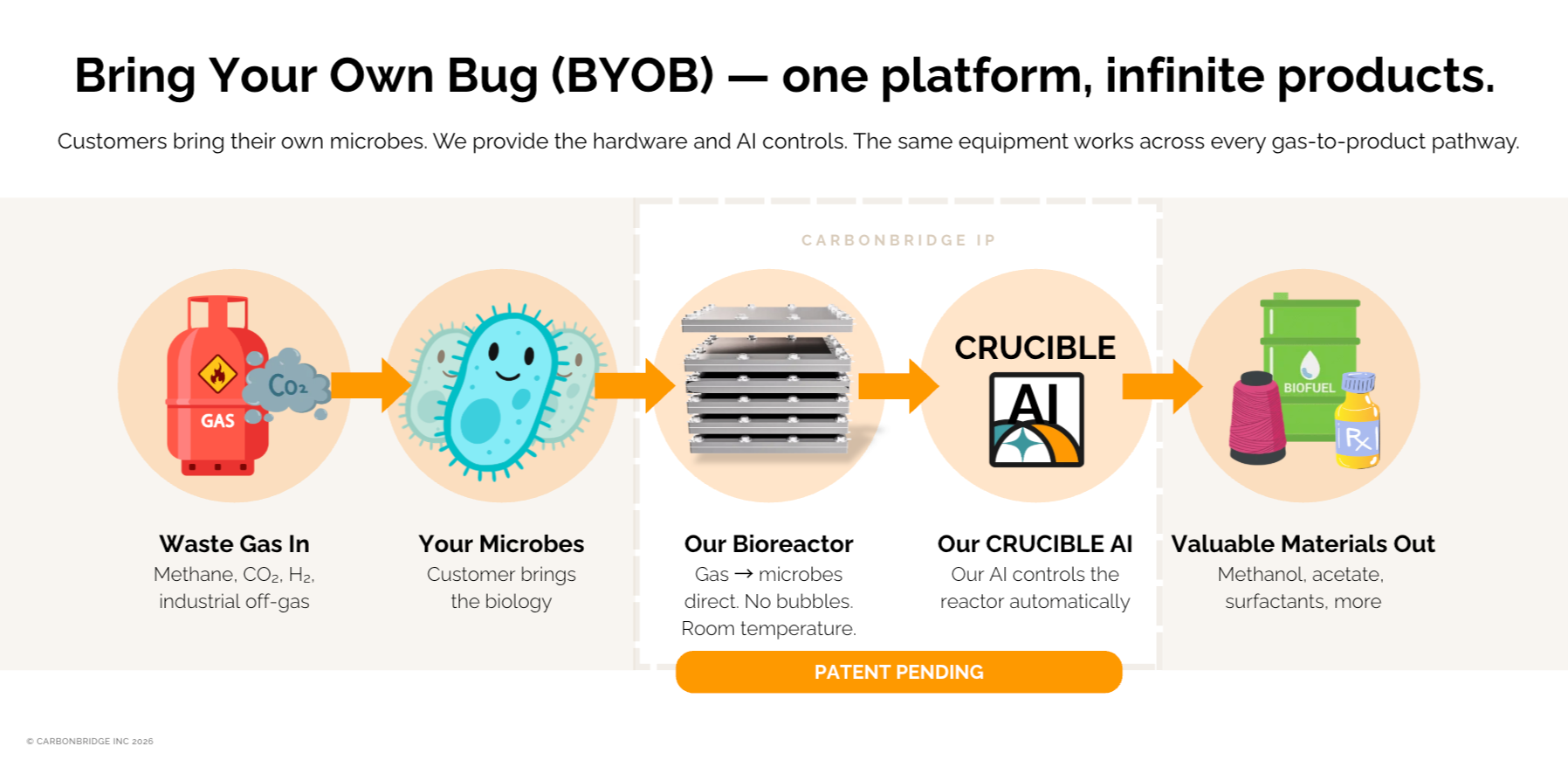
Crucible (Closed-loop Reconfigurable Unified Control for Internet-scale Biological Elastic Manufacturing) is CarbonBridge’s proprietary artificial intelligence software for automated control of each bioreactor setup. Crucible is an architecture built using Manu’s background and experience in networked systems and wide area deployment. Instead of using expensive Programmable Logic Controllers (PLCs) and centralized control, the architecture uses fast (10G, 1G) Ethernet, low cost controllers to connect to sensors and actuators at the physical layer. On the logical layer, the system breaks down into a black-box of a microbe behavioral model that identifies the optimum conditions for microbe performance. A physics model tracks the capabilities of the specific reactors, and a constraint model over-rides for safety and reality. Everything is then controlled through an orchestration layer. Crucible means that the work done by a researcher can be modeled with high accuracy at production rates, allowing rapid understanding of which paths can lead to economic outcomes.
When combined with CarbonBridge’s work in materials science, this also means the production intensity of the machinery increases with every release cycle.
Meet the Team: Engineers Who Understand Hardware, Software and Biology
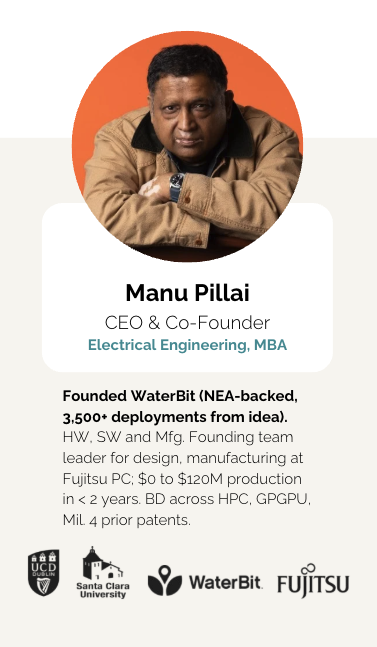
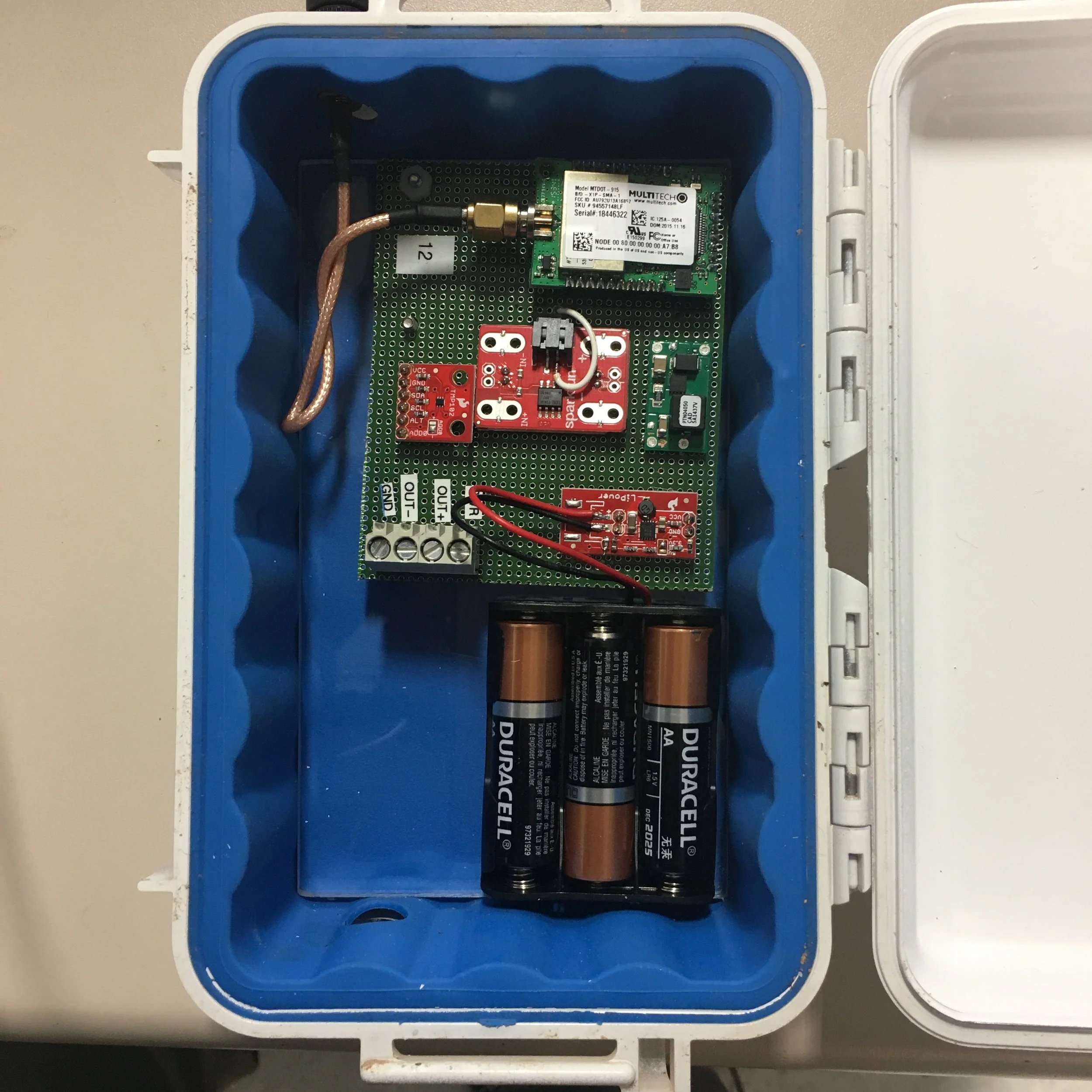
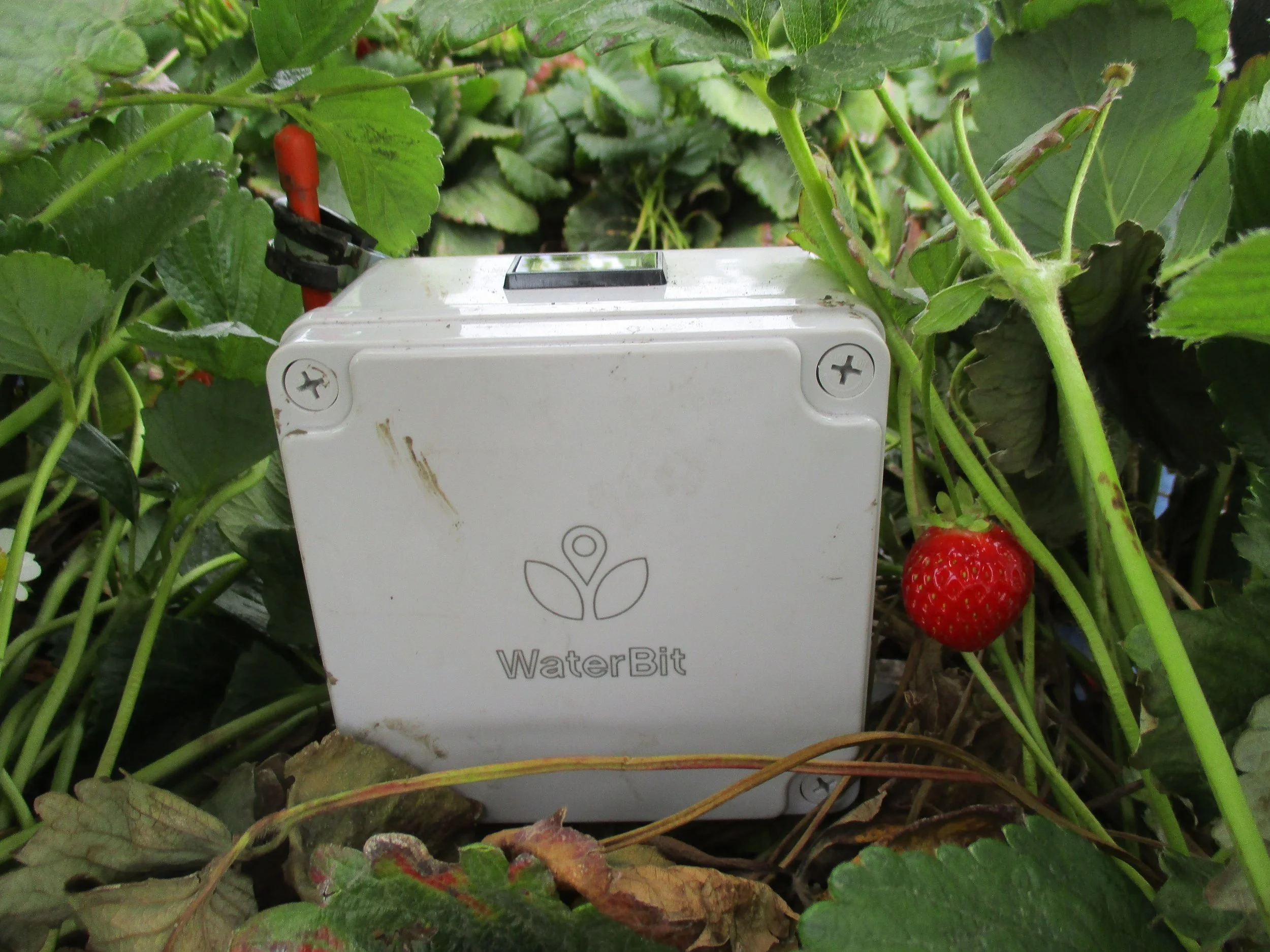
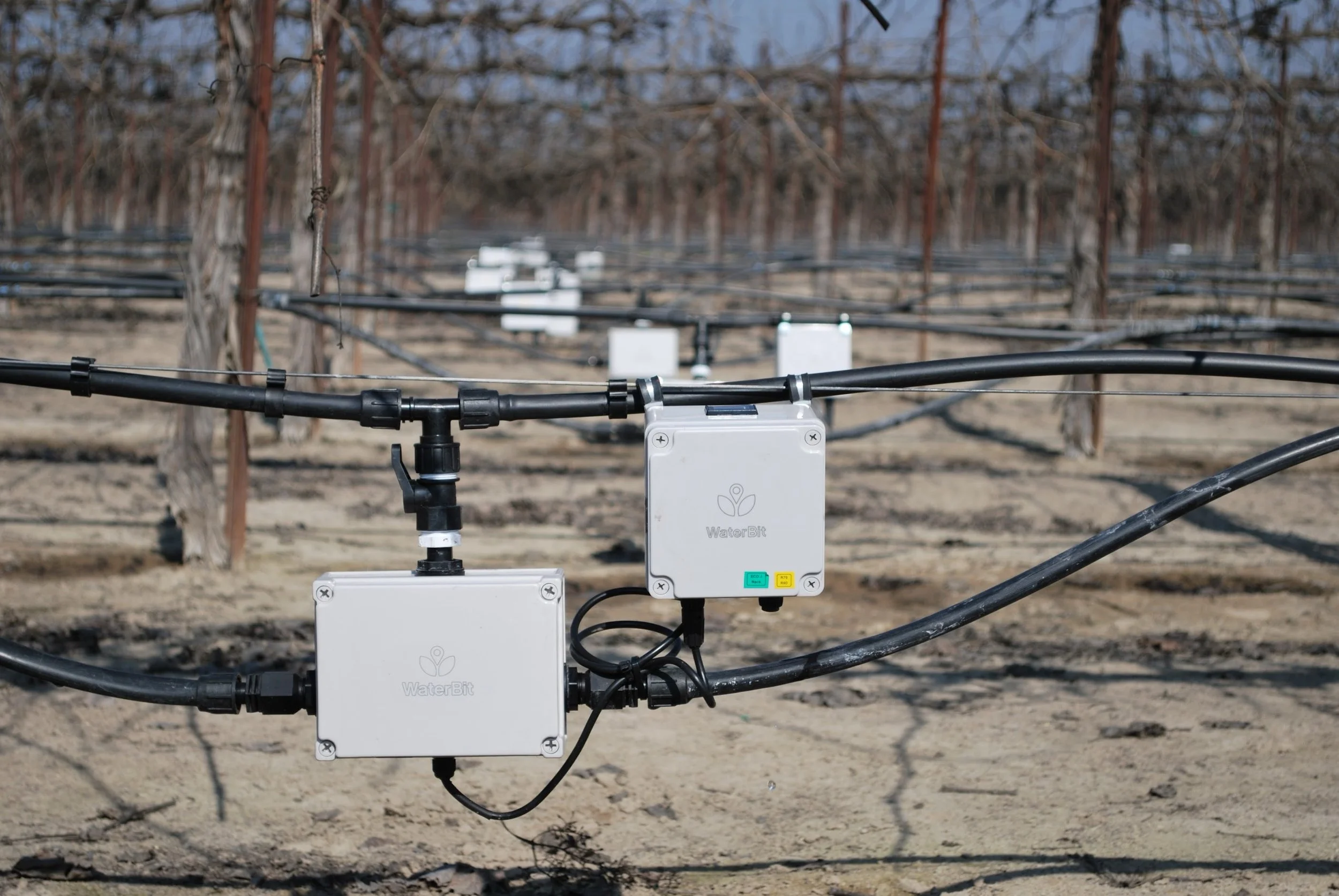
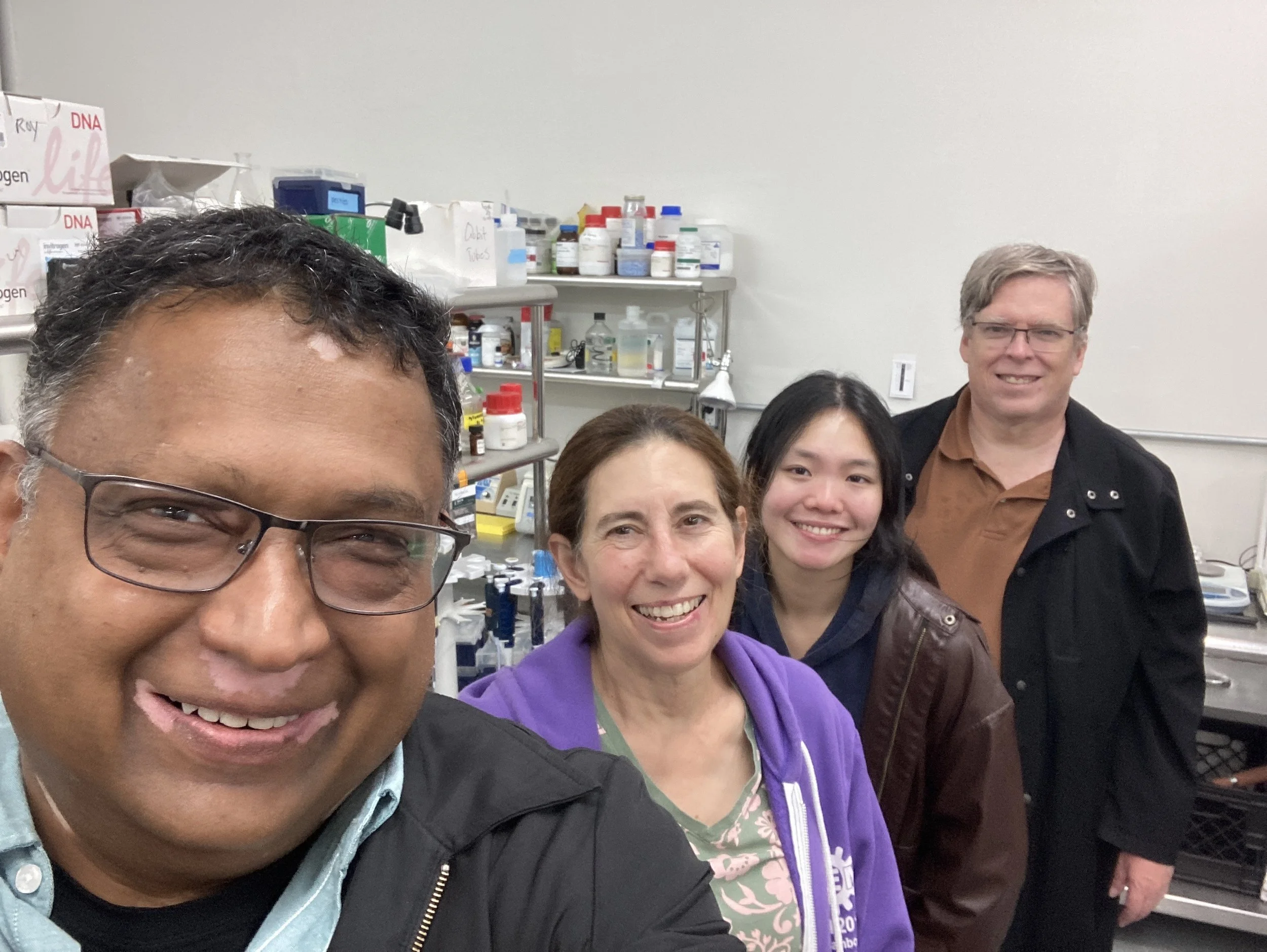
Manu Pillai serves as Co-Founder and CEO of CarbonBridge. He’s a serial entrepreneur, with CarbonBridge being his 3rd entrepreneurial venture. He has worked as an engineer at Mitsubishi Electric, Solectron - which was acquired by Flextronics, and Fujitsu - where he built the engineering systems to deliver $120M+ in product in under 3 years, and most recently as a systems engineer in Hexagon’s Autonomy & Positioning division. He has also worked in business development at GDA Technologies Inc - which was acquired by L&T Infotech, Nethra Imaging - which was acquired by Imagination Technologies and where he built a $50 million sales pipeline across Japan, the European Union, and Taiwan. At MulticoreWare Inc. he worked in compilers, codecs and high performance computing. His prior entrepreneurial endeavours are: Product Acceleration - a systems design software startup that counted Xilinx and Cadence as partners, with customers like Nokia, Intel, Cisco, and Sandia Labs, and; WaterBit Inc - an automated irrigation technology startup that deployed as many as 3500 dispersed, internet connected, remote monitoring and control systems. Manu started WaterBit in his garage with 2 chopsticks and a piece of wire, advancing through a hand-built proof-of-concept, and eventually to deployment across California and the United States before handing over to a hired CEO. Manu holds a bachelor’s of engineering in Electrical Engineering from the University College of Dublin, and an MBA in Finance and Marketing from the Leavey School of Business at Santa Clara University.

Sophia Xu serves as Co-Founder and Chief Scientific Officer (CSO) of CarbonBridge. Her unique insight about directly delivering gases to microbes and completely bypassing the need to dissolve the gases in solvents during gas fermentation is key to CarbonBridge's reactor design. Sophia’s experience prior to starting CarbonBridge with Manu and Bill spans: Laboratory research at the MD Anderson Cancer Center-where she solo-published her wet-lab work at 17, Uniphage Inc. working on biopesticides, and the University of Texas at Austin where she won an Undergraduate Research Fellowship grant for solo and independent academic research and worked on research inspired by the United States’ Department of Defense to engineer bacterial viruses to determine drinking water quality; Sophia graduated in 3 years at 20 years old and holds a bachelor’s of science in General Biology from the University of Texas at Austin; Among other things, she served as team leader for the gold medal winning 2020 UT Austin iGEM project related to phage and computational biology. She was also recently named to Forbes 30 under 30 Energy and Green Tech list (class of 2026).

Bill Koutny serves as Co-founder and Senior Member of the Technical Staff at CarbonBridge. His specialty is in materials science and semiconductor engineering. He served as a principal engineer at Cypress Semiconductor for 33 years, from June 1984 to December 2017. He is a named inventor or co-inventor on more than 20 patents assigned to Cypress Semiconductor. He joined Manu at WaterBit in 2017, and their collaboration there lasted almost 4 years across sensor physics, business processes, production and quality. Manu is dyslexic. Bill ensures Manu’s numbers are right. They both prefer to work from first principles, and They teamed up again to build CarbonBridge in October 2022.

Ellen Jorgensen is the Vice President of biotechnology at CarbonBridge. She is a molecular biologist and serial entrepreneur. Her career includes technical and scientific roles at Lifecodes Corporation, Antioxidant Pharmaceuticals, the Albert Sabin Vaccine Institute, Penwest Pharmaceuticals, the American Health Foundation, Vector Research Ltd., and the New York Medical College. Ellen founded Synbiolab Consulting in 2012. She co-founded Aanika Biosciences, Inc. in 2018 and in her role as Chief Scientific Officer, she led a team of scientists in the creation of a traceable and edible bio-marker for securing food supply chains. Ellen cofounded Genspace NYC in February 2009. Genspace NYC is the world’s first community-driven biotechnology lab. She currently serves as President Emeritus. Ellen founded Biotech Without Borders in 2017. Biotech Without Borders is another community biospace non-profit in Queens, NY, which Ellen founded with the goal of providing access to scientific training for the next generation of innovators from communities that are underrepresented in science. Ellen earned a bachelor’s of arts in biology from New York University, a master’s of arts and a master’s of philosophy in biology from Columbia University, and a Ph.D. in cell and molecular biology from the Sackler Institute at New York University. She has an extensive record of academic publications as well as a track record of making complex science more accessible to the general public.
Manu and Sophia met at an event in Houston in November 2022. Their conversation led Manu and Bill to start rethinking their work on CarbonBridge. By February 2023 Manu and Bill made the decision to pursue CarbonBridge’s current trajectory. Manu met Sophia again during South by Southwest (SXSW) 2023 in Austin, and Sophia joined CarbonBridge shortly thereafter. Ellen has known the CarbonBridge team since their very early days, when Sophia was still figuring out the feasibility of CarbonBridge’s direct-gas delivery mechanism and initially worked from Biotech Without Borders.
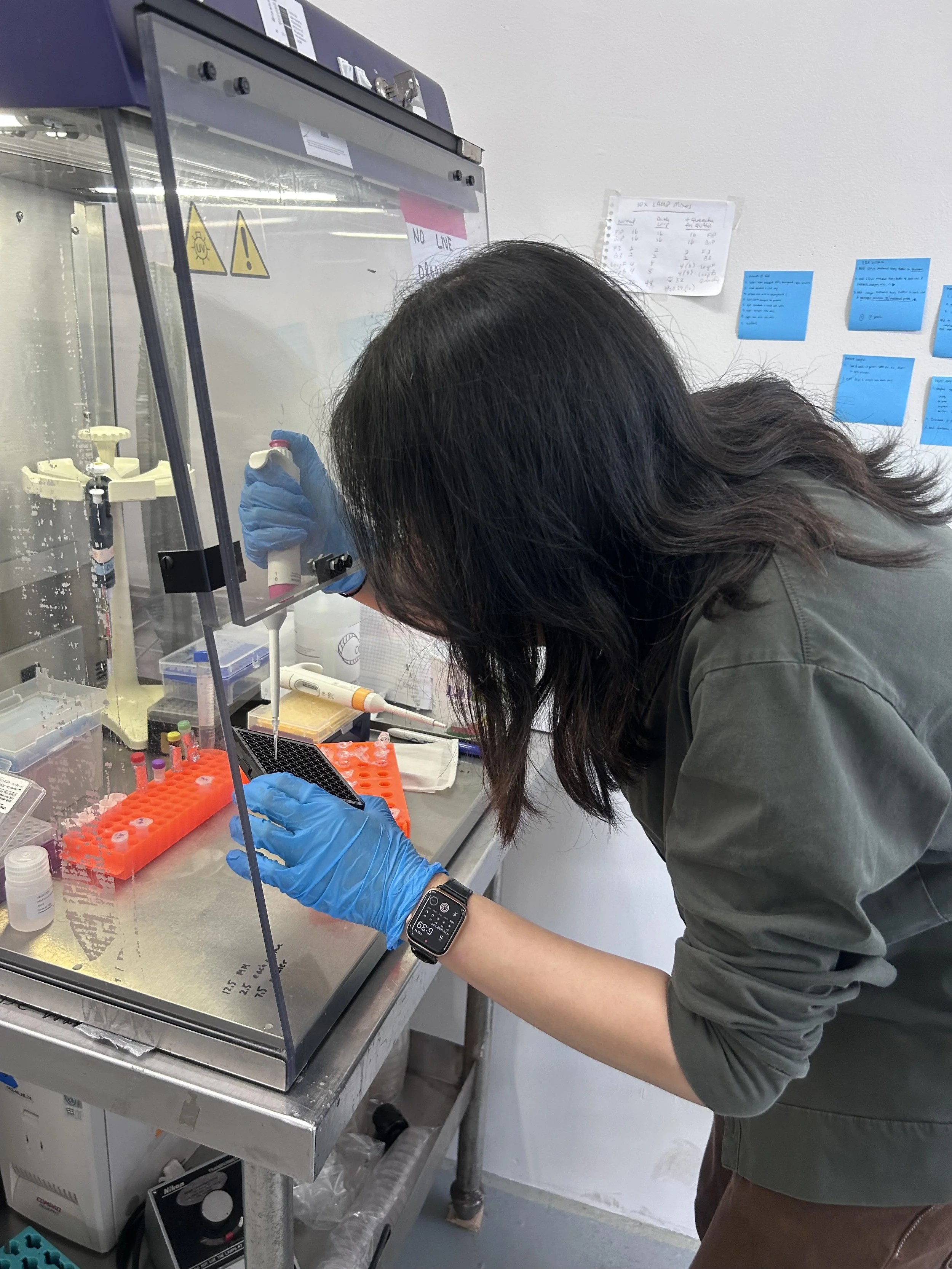
The team at CarbonBridge approaches innovation with a reductionist mindset; stripping complex problems down to their most essential, foundational parts, and then tackling each part one at a time. That worldview is present in the design of CarbonBridge’s bioreactor.
Why Decentralized, Modular Biomanufacturing Is the Future of Industrial Chemistry
In Proximity: How Coming Breakthroughs in Just-in-Time Transform Business, Society, and Daily Life, the authors Robert Wolcott and Kaihan Krippendorff argue that business models that move the point of production closer to the end customer will result in transformations across different industries, with important implications for supply chain resiliency and sustainability, among other things.
Supply Chains must exist in a world that is simultaneously becoming more volatile, uncertain, complex, and ambiguous. To confront this reality there are calls for more resilient supply chains, or in some cases more robust supply chains. A fragile supply chain prioritizes cost-efficiency at the expense of flexibility. A robust supply chain is designed to resist change and disorder. A resilient supply chain bounces back to the status quo relatively quickly after a disruption.
Recent events ought to demonstrate that fragile, robust, and resilient supply chains are inadequate for the realities of the world we live in today: Centralized supply chains are fragile by default; Robust supply chains can only be robust to risks that are already known, and; Resilient supply chains can’t be resilient if the status quo they were designed for ceases to exist due to a regime change that upends the rules of the operating environment for industries and businesses.
In Commentary: Exogenous variables dominate a world with VUCA, which I authored and which ran in FreightWaves on February 28, 2020, I argued that the proliferation of exogenous risks makes supply chain network design and architecture an issue that calls for urgent reconsideration. In Commentary: Is 2020 the year of supply chain risk?, which ran in FreightWaves on March 5, 2020, I pointed out that the proliferation of global supply chain risks, events with the potential to take out supply chains across industries and geographical boundaries around the world, similarly calls for an urgent rethinking of supply chain network design and architecture.
Since then, the outbreak of war in Russia and Ukraine and more recently in the Middle East, are just 2 events that support the arguments I outlined in those articles and others. CarbonBridge is one of a growing cohort of startups that make a future of antifragile supply chains an idea that is moving from the realm of abstract theory into real-world implementation. Antifragile supply chains use disruptions and shocks as a catalyst for improvement, they gain from disorder; Rather than recovering to the status quo, they automatically reorganize in order to capture, encode, and entrench gains from the prevailing chaos.
Rob Walcott calls this approach Edge Scaling; The deployment of small, modular, networked, and intelligent operating nodes as close to demand as possible. Edge Scaling has a number of benefits. But it also requires a refashioning of significant aspects of how manufacturing is done. One thing is certain, edge scaling is not about deploying smaller versions of large centralized manufacturing operations.
As Manu and the team at CarbonBridge put it; “When industrial bio-manufacturing companies say “modular,” they almost always mean a smaller version of a full plant. Same architecture, same one-of-a-kind integration, same construction lead time, same brittle dependency between every subsystem and every other subsystem. You can build one — but will really struggle to build a hundred, in any reasonable amount of time, at any reasonable cost.”
That is not Edge Scaling, and it is not how I would consider designing an antifragile supply chain.
Evidence for the operational and financial advantages that accrue from Edge Scaling in biomanufacturing can be found in Decentralized Biomanufacturing Models Emerging in Biotech, Cell-Free Biomanufacturing: Decentralized Approach for Fuels & Chemicals Synthesis, The Next Wave of Biomanufacturing Facilities: Automation, Digitization and Sustainability, Global Biomanufacturing Trend Analysis: Capacity Expansion, M&A Activity, And Regional Footprint Landscape, Benefits and Challenges for Decentralized Use of Biomass as Feedstock for Chemicals in Chemie Ingenieur Technik (2025).
Government-led, regulatory, and multilateral efforts that favor Edge Scaling in biomanufacturing are described in Factsheet: 2024 Global Methane Pledge Ministerial, USDA Outlines Vision to Strengthen the American Bioeconomy through a More Resilient Biomass Supply Chain and others.
Where Does Disruption Come From: Buy-Side Innovation + Sell-Side Innovation?
In The Disruption Dilemma, Joshua Gans categorizes innovation in two forms. Demand-Side Innovation, in which the market entrants target incumbent players’ least profitable customers with products largely considered inferior at the outset. I like to refer to this as Buy-Side Innovation because the innovation is driven by an examination of buyers’ categories and their attendant needs. Supply-Side Innovation occurs when new market entrants develop a completely new architecture for meeting demand. This is often accompanied by new technological and business model competencies that are invisible, illegible, and indecipherable to incumbents at the outset. I refer to this as Sell-Side Innovation since it arises almost entirely because of choices made, and R&D done, by sellers of the innovation.
Demand-Side Innovation was formalized by Clayton Christensen, with the publication of his book, The Innovator’s Dilemma - popularizing the term Disruptive Innovation. Supply-Side Innovation is based on Architectural Innovation: The Reconfiguration of Existing Product Technologies and The Failure of Established Firms by Rebecca Henderson and Kim Clark.
On July 19, 2015, I published Notes on Strategy; Where Does Disruption Come From? which examined Demand-Side Innovation, Clayton Christensen’s framework. On October 25, 2018, Lisa Morales-Hellebo and I published Where Will Technological Disruption in The Fashion Supply Chain Come From?, in which we examined Demand-Side and Supply-Side Innovation.
Our work has led us to conclude that disruption, which is the significant reorganization of market structure in an industry such that incumbents are supplanted by new entrants with accompanying losses of significant market share by the incumbents and substantial gains in market share by new entrants, occurs when Demand-Side and Supply-Side innovations occur in close temporal proximity within an industry, usually from disparate organizations bringing distinct products to market.
As an investor in CarbonBridge, I am clearly opening myself to criticism; However, one can make a strong argument that this team has designed both Demand-Side and Supply-Side innovation into the same product and platform: Demand-Side because of the $4,500,000 versus $200,000,000 cost of an equivalent unit of CarbonBridge’s bioreactor compared to a traditional unit; Supply-Side because of Sophia’s unique insights about direct gas-to-microbe delivery which the team then engineered into their physical bioreactor. Crucible serves as the nervous system and intelligence layer to connect the network of bioreactors. Moreover, CarbonBridge’s edge scaling and proximity-based advantages are not easy for established incumbents to quickly replicate.

Energy supply chains continue to be scrutinized in the context of increasing geopolitical tensions, this may explain why the team has won support from the United States’ Department of Energy’s Advanced Research Projects Agency - Energy (ARPA-E), with initial funding of $700,000 in 2024 and $1,850,000 in 2026; Energy supply chain dominance has moved from the realm of abstract conceptualization to real world urgency and application.
Addressing The Elephant in the Room: BioManufacturing & BioTech Investments
It’s fair to argue that biomanufacturing has not lived up to the expectations that investors have had of the sector.
For example, in Groundhog Day: Will Biomanufacturing Ever Break out of Its Time Loop? Stephen Sameroff makes the observation that biomanufacturing predates recorded history, and has recorded impressive wins in the past when the government has played a central and catalytic role in driving innovation in the manner described in Marianna Mazucato’s book, The Entrepreneurial State.
Yet, to quote Stephen, “The tools have never been better, and capital followed. Between 2019 and 2022, roughly $50 billion flooded into the biomanufacturing industry worldwide, more than the field had raised in its entire history. The vision behind that capital was a future in which the materials, medicines, and foods we rely on are grown rather than extracted, fermented rather than synthesized, and produced by living systems rather than by industrial chemistry. Meat and leather grown in bioreactors. Plastics replaced by bio-based materials. Medicines designed on a computer and produced in microbes.”
Furthermore, he adds, “Like back in World War I, today a lack of manufacturing infrastructure is prohibiting progress. The bioreactor capacity needed to produce alternative proteins at any meaningful commercial scale simply doesn’t exist, and building it requires capital that the market is increasingly reluctant to provide.”
And, “Scale-up is also proving more difficult than projections indicated. What works at the bench performs differently in a hundred-thousand-liter bioreactor, and the gap between laboratory promise and factory reality is wider than any pitch decks suggest.”
Mackenzie Morehead makes an argument similar to Stephen’s in Dozens of Nobel-Worthy Innovations Awaiting Biomanufacturing 2.0. Notably, Mackenzie observes that “The pharma industry started with large stainless steel batch-fed tanks and with its conservatism has been slow to try anything else. Biomanufacturing for other industries began by porting over pharma’s setup and only somewhat recently has the field re-evaluated from the ground up how to best design bioreactors for their cheaper markets and their particular products. It feels like a teenager questioning everything its parents told them and forming their own views – and we’re here for it.”
These are all issues we considered while assessing CarbonBridge. In fact, our instinctive knee-jerk reaction at the outset was to pass on a conversation with the team entirely. What caught my attention when I spoke with the team during our very first call is the fact that CarbonBridge addresses the physics and engineering limitations that others point out as the Achilles Heel of biomanufacturing. With its bioreactor design CarbonBridge has solved problems around solubility, energy consumption, and the pressure at which gas fermentation occurs - the limits imposed by Henry’s Law.
According to Manu, “Previous attempts to address these constraints have included intricate agitator design, spargers (bubblers) and more. More recent attempts focus on running a number of smaller classic reactors in parallel. However, the fundamental issue of pressure and energy is not solved. These problems are constant, irrespective of founder backgrounds. Attempts to solve this earlier have ranged from changing CEOs, feedstock, end markets - none have worked. In contrast CarbonBridge is physics and engineering first; the hardest problem set has been solved first - avoiding solubility challenges with direct-gas delivery.”
Manu adds, “When you look at biomanufacturing, the biggest venture risk was in scaling; behind that was mass transfer. This meant the only deals that made sense so far were high value molecules that did not need to scale - several tiny reactors in parallel would still work. And there are legitimate businesses there.
CarbonBridge has eliminated the mass transfer problem for a significant group of microbes and associated production pathways - this was what the first tranche of ARPA-E funding was used for. This removed the single largest venture risk, enabling our end customers to start mapping to our system. That's what is going on at Lawrence Berkeley National Laboratory and A*Star, for example.
Our long-term goal is to unlock biomanufacturing, the way the PC unlocked desktop computing, with the subsequent evolution to servers, and the further subsequent evolution to datacenters. The BYOB model (Bring Your Own Bug) is key to this. Other parts of our work around standardization and models accelerate this further.”
I promised we’d come back to MMOs; CarbonBridge offers organizations investigating MMOs a promising alternative to the status quo. Evidence of this comes from some of the conversations the team is currently having with potential customers in addition to those underway with Lawrence Berkeley, A*Star, and ARPA-E.
In Benchmarking greenhouse gas emissions from US wastewater treatment for targeted reduction in Nature Water (2025), the authors report that a comprehensive inventory of 15,863 US wastewater treatment plants reveals that the sector emits a median of 47 million tonnes of carbon dioxide equivalent annually, with on-site methane and nitrous oxide emissions exceeding current government estimates by 41%. The study highlights a critical trade-off between water quality and climate goals, finding that facilities with anaerobic digesters and nutrient removal systems generate the highest greenhouse gas emissions intensity despite their respective energy recovery and environmental benefits. Waste Water Treatment Plants collectively form a market that we believe will find CarbonBridge’s architectural innovation, financial competitiveness, and operational flexibility a compelling value proposition.
However, it is important to reiterate that the methane-to-methanol conversion market is just the beginning. It is not the only opportunity available to CarbonBridge.
We are #ObsessivelyEnthusiastic
As we say at REFASHIOND Ventures, we are #ObsessivelyEnthusiastic about what the team at CarbonBridge is building.
REFASHIOND Ventures: The Industrial Transformation Fund invests in early stage startups refashioning legacy industries through Data & AI, Advanced Materials, Advanced Manufacturing, & Next Generation Supply Chains; Defensible through economic moats.
At scale, CarbonBridge will sit at the intersection of all our investment categories. We are excited to see how things unfold as time progresses.
If you are a startup founder who believes that what you are building fits our thesis, please fill out our data-intake form. We review submissions on Mondays, Tuesdays, Wednesdays, and Thursdays during our team meetings, and we reach out to the startups from whom we would like more information.
At most venture capital firms, early-stage Industrial Transformation & Supply Chain Technology is a tiny, emerging “area of interest” . . . At REFASHIOND Ventures, it’s our entire world. Startup founders can learn more by reading the For Founders section of our website.
Updates
#1: Added cost reduction and productivity increase data to TL;DR (Sunday, July 11, 2026 at 3:12 pm ET).