Why We Invested: Mothership Materials
Statement on the Use of Generative-AI and AI-Assisted Technologies
The author’s use of Generative-AI and other AI-Assisted Technologies in the writing process adheres to the CFA Institute’s Code of Ethics and Standards of Professional Conduct [Ethics and Artificial Intelligence in Investment Management : A Framework for Professionals, CFA Institute, 2022]
Table of Contents
Introduction: What is biomanufacturing and why should you care?
Modern Biomanufacturing: The Next Industrial Revolution
Understanding the Bioeconomy Value Chain
The Problem: The Bioeconomy is Growing Faster Than its Supply Chain
The Problem: Agricultural Waste is a $2.6 Trillion Missed Opportunity
Mothership Materials: Turning Waste Streams into Circular Feedstocks for the Bioeconomy
Targeted Molecule Recovery (TMR): A “Coinsorter for Molecules”
Customer Applications: Fueling Precision Fermentation, Bioplastics, Upcycled Textiles, and More
Meet the Team: A 4x Founder and a Chemical Physicist Walk Into a Lab
Why Innovations in Bioeconomy Supply Chains Are Consequential
Conclusion: We Are #ObsessivelyEnthusiastic
TL;DR
Mothership Materials converts agricultural waste into high-value bio-based feedstocks for the rapidly growing $7 trillion bioeconomy, solving supply chain issues with its proprietary microfactory platform.
Introduction: What is Biomanufacturing and Why Should You Care?
According to the United States Government Accountability Office (GAO); “Biomanufacturing is a type of production that uses biologically derived components, such as living cells or microorganisms to create and produce new materials.”
In Defense Industrial Base: DOD Efforts to Develop Domestic Biomanufacturing, the GAO goes further; “The biomanufacturing process generally involves combining biological materials, which may include microorganisms, a nutrient source such as corn or soybeans, and other inputs such as energy and water to create a biological reaction. This reaction creates the desired product and waste material, which is then extracted or filtered out. Companies then use these biomaterials in the same manner as traditionally manufactured materials to make the products they sell commercially or to defense customers.”
Biomanufacturing is not far removed from your daily experience; Cheese, yogurt, butter, bread, and beer are food products that result from traditional biomanufacturing.
Biomanufacturing is part of the bioeconomy. However, it is important to note that the GAO states, “There is no standard definition of the bioeconomy. The scope, emphasis, and definition of a nation's bioeconomy vary based on the country's technological capacity, natural resource base, and economic and trade policies. However, all nations with a definition of the bioeconomy view it as crosscutting, encompassing multiple sectors, in whole or in part (e.g., agriculture, textiles, chemicals, energy, and pharmaceuticals).”
In Safeguarding the Bioeconomy (2020), the United States National Academies of of Sciences, Engineering, and Medicine states “The U.S. bioeconomy is economic activity that is driven by research and innovation in the life sciences and biotechnology, and that is enabled by technological advances in engineering and in computing and information sciences.”
Bioengineering is closely related to biomanufacturing and the bioeconomy. Bioengineering is the application of engineering principles to biological systems.
This all leads us to the question, “Why does any of this matter?”
Modern Biomanufacturing: The Next Industrial Revolution
The world we live in is wholly dependent on natural resources and ecosystems - everything we depend on is either grown or mined. Raw materials that are grown are organic and renewable - Food & Agriculture, Natural Fibers & Materials, and other Natural Products; Raw materials that are mined are inorganic and extractive - Metals, Minerals & Elements, Fossil Fuels.
This makes production systems that are complementary and positively symbiotic with nature a necessity. Biotechnology, bioengineering, biomanufacturing, and the bioeconomy constitute one possibility for making organic raw materials more sustainable. Inorganic Green Chemistry or Sustainable Inorganic Chemistry holds promise for making our use of inorganic raw materials more sustainable since these natural resources are non-renewable and finite.
In Strategic Investments the US Can Make in the Bioeconomy Right Now, the Federation of American Scientists lists the following as a non-exhaustive list of industries that fall within the bioeconomy;
Healthcare,
Agriculture,
Forestry,
Chemicals,
Utilities, and
Environment.
In her TED Talk, Why "biofabrication" is the next industrial revolution, Suzanne Lee highlights examples of biomanufacturing or biofabrication in the development of new materials for all sorts of products across some of the industries listed above and others not on that list. Lee is the Founder & CEO of Biofabricate, and has been working on biofabrication since 2002, starting with the premise that we can grow materials for clothing from microbes. In her words, “We used a kombucha culture, which is a mix of yeast and bacteria. All you need to do is feed the bacteria with sugar and they create cellulose fibers, which naturally self-assemble to form a non-woven sheet material.”
In China’s Chemical Giants Invest in Biomanufacturing: China’s Bioeconomy Moves From Startup to Scaleup, World Bio Market’s Insight highlights 3 examples of Chinese companies scaling biomanufacturing in bioplastics and biofuels. It is interesting to note that the 3 companies profiled are large players in petrochemicals, but have made the strategic choice to invest intensively in research and development for biomanufacturing in order to transform the industry. Collectively they are scaling across Europe, South America, Asia, and North America. Furthermore, the Chinese Government has published plans to build pilot scale biomanufacturing platforms by 2027, including a list of 43 companies that “dwarfs any other program in the world to build scale-up facilities. It probably also dwarfs any other current Chinese government emerging tech industrial program.”
Understanding the Bioeconomy Value Chain
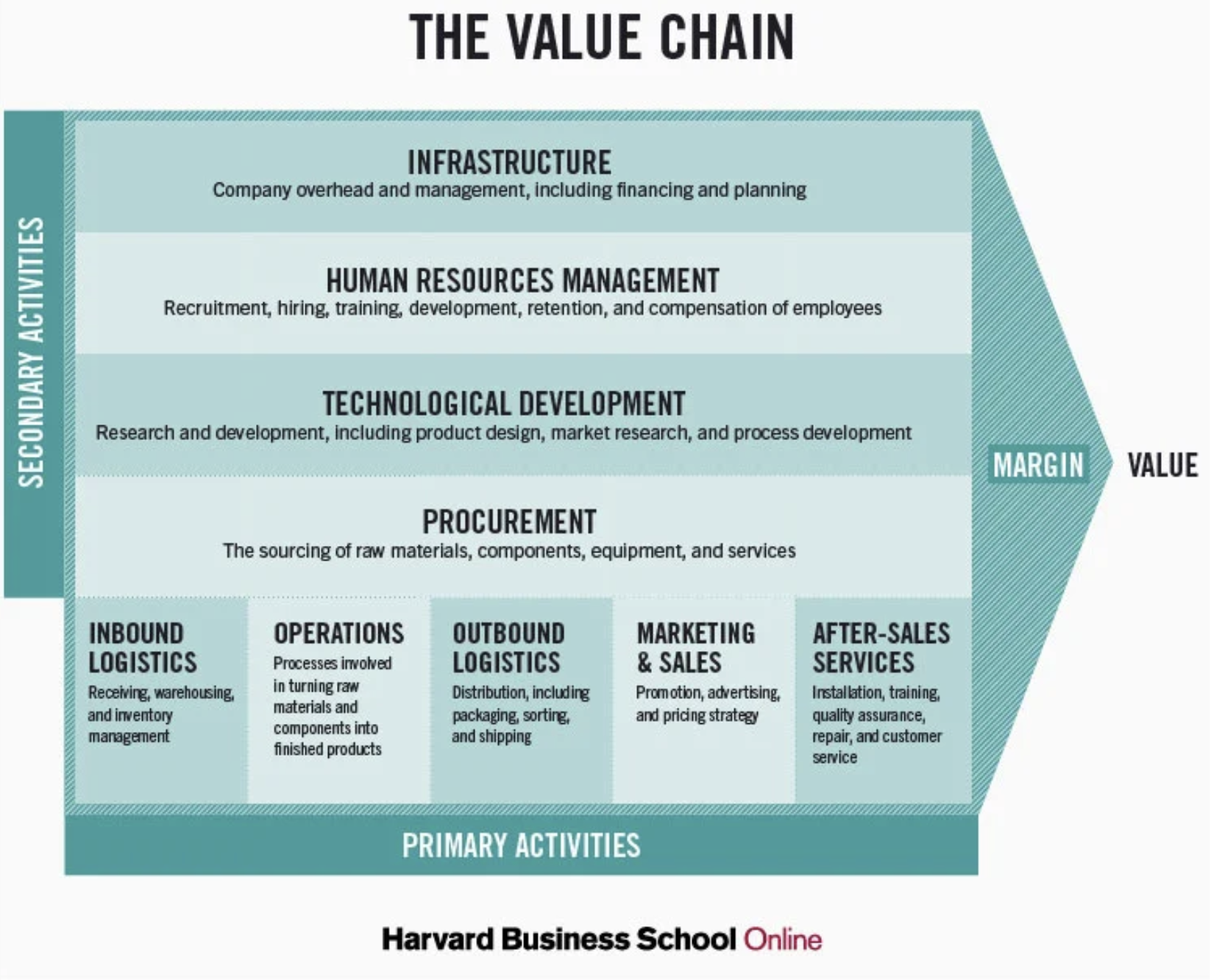
In simple terms, a value chain is the organizing mechanisms and systems that a single company relies on as it creates and delivers value to its customers. The term was coined by Michael Porter in his book, The Competitive Advantage: Creating and Sustaining Superior Performance. The image below summarizes the concept.
A detailed explanation of value chains is beyond the scope of this article. The relevant point is that a critical aspect of biomanufacturing value chains is the production of feedstocks, and the acquisition of feedstocks as an input for Inbound Logistics, the very first Primary Activity in the biomanufacturing value chain.
One can think of the biomanufacturing value chain as being structured in this way: Waste Generators → Feedstock Producers → Biomanufacturers → End Markets. This is obviously a highly simplified version of the biomanufacturing value chain, but it suffices for the purpose of this article.
Feedstocks are the raw materials that serve as inputs for any manufacturing process. In the biomanufacturing value chain described above, producers of Agricultural Waste serve as Feedstock Producers for companies that turn that agricultural waste or biomass into specific biobased chemicals that in turn serve as feedstock (2nd generation feedstock) for the Biomanufacturers whose operations use those biobased chemicals as inputs for the production of their own products for sale to their End Markets.
In Building a Resilient Biomass Supply: A Plan to Enable the Bioeconomy in America, the United States Department of Agriculture (USDA) states, “Biomass is the foundation of the U.S. bioeconomy. Biomass comes from crops, agricultural and food wastes, forests, and livestock. It is the basis for thousands of biobased products that we encounter every day, such as furniture, building materials, bioplastics, paper products, clothing, and biofuels. Demand for biomass is expected to grow over time for use in climate-smart and sustainable solutions to address society’s needs.” Adding, “For the United States, this represents a golden opportunity. The expansion of markets for domestically produced biomass will create new sources of revenue for American farmers, ranchers, and forest landowners, particularly in rural areas. This will be critical for the future vibrancy of the U.S. agricultural and forestry sectors.”
But economies, and industries, run on supply chains, and that’s where there’s an obstacle for the bioeconomy.
The Problem: The Bioeconomy is Growing Faster Than its Supply Chain
Biomass is converted into biobased feedstock. However, the bioeconomy’s supply chain, the underlying mechanism that supports production and consumption in the bioeconomy, is failing to keep pace with demand for feedstock. This means that, even though biomass is ubiquitous, there is limited infrastructure to convert it into useful feedstock, and to store and transport the feedstock to other production facilities.
Again, in Building a Resilient Biomass Supply: A Plan to Enable the Bioeconomy in America, the United States Department of Agriculture (USDA) states, “One of the greatest challenges for the entire biotechnology and biomanufacturing enterprise is the availability and affordability of quality feedstock at scale. Expanding the use of biobased feedstock is not only essential for advancing the domestic bioeconomy, but also for mitigating effects from climate change. The United States needs to increase biobased feedstock production without adversely impacting landscapes or the production of other important commodities, and the communities that depend on both. Expanding biomass feedstock production will require a series of efforts including increasing agriculture crop yields, growing new and different crops, finding cost effective ways to capture waste wood and agricultural and food wastes, making changes in how crops are used, and using crop portfolios that can take advantage of economically marginal lands while maintaining or enhancing the ecosystem services these lands provide.” Adding, “Reaching scale will require innovation, infrastructure investment, and technology to realize the potential of these underutilized waste biomass streams and new biomass crops and uses. Understanding biomass feedstock supply systems, processing, distribution, and markets can allow for strategic investments to increase the economic viability of biomanufactured and biobased products.”
In June 2023, Schmidt Futures and the Foundation for Food and Agriculture Research hosted a bioeconomy stakeholder convening, Feedstocks of the Future for a Circular U.S. Bioeconomy. In a summary of the discussion published after the convening: Panelists discussing the topic Future Feedstocks Challenges & Opportunities suggested that in order to scale, future biobased feedstocks have to be cost-competitive, ubiquitous and abundant, predictable, compatible, sustainable, and transportable; Panelists discussing the topic Transformational Technology Challenges & Opportunities highlighted the need for reducing the costs associated with scaleups, and systems thinking, in the bioeconomy, and; The final panel discussion on Future Feedstocks & Opportunities for Biobased Chemicals focused on the difficulty of identifying biobased chemicals for which there’s growing demand from industry and the challenges that accompany aggregating, collecting, and transporting such feedstock due to high transportation costs.
The Problem: Agricultural Waste is a Multi-Trillion Dollar Missed Opportunity
Food Loss and Food Waste are big problems. On September 9, 2025, the Food and Agriculture Organization of the United Nations published the following data to mark the International Day of Awareness of Food Loss and Waste;
“Every year, 13.3% of total production is lost between harvest and retail, equating to 1.31 billion tonnes of global food production.”
“Globally, fruit and vegetables have the highest loss rate at 25.4%, followed by meat and animal products at 14%.”
“The highest losses occur in Sub-Saharan Africa at 23 per cent, while North America and Europe have the lowest losses at 10 percent.”
In Circular bioeconomy: The business opportunity contributing to a sustainable world, published by BCG and the World Business Council for Sustainable Development in November 2020, the authors state that:
“The total market for bio-based food and feed, products, and energy is expected to grow from USD $10.3 trillion in 2018 to USD $12.8 trillion in 2030, representing a 1.8% annual growth over this time. The required biomass to fuel this growth is expected to increase from 23.4 billion tonnes in 2018 to 26.7 billion tonnes in 2030.”
“Bio-based products and energy, excluding food and feed consumption, is expected to grow stronger compared to the total market – 2.4% per year until 2030, reaching USD $7.7 trillion in 2030.”
“The highest increase is expected in the market segment of bio-based products and energy alone, excluding food and feed consumption as well as waste. Although this segment is comparably small – only making up $3.4 trillion in 2030 – it is expected to grow by 3.3% per year until 2030 and will reach $5 trillion in 2030.”
As has been noted already, one issue that is holding the bioeconomy back from fulfilling its potential is the sourcing and procurement of bio-based feedstocks.
This is where Mothership Materials comes in.
Mothership Materials: Turning Waste Streams into Bio-based Feedstocks
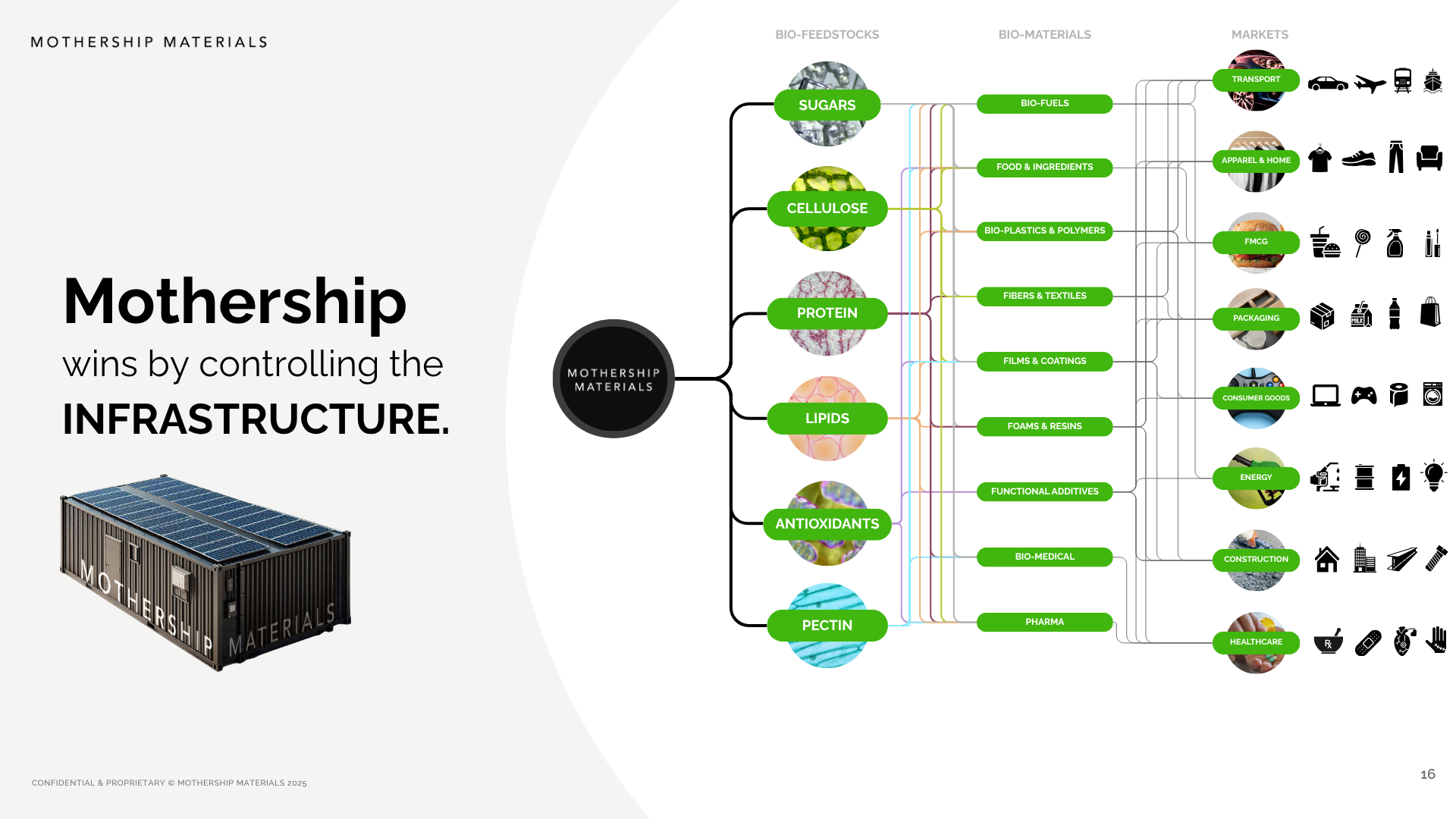
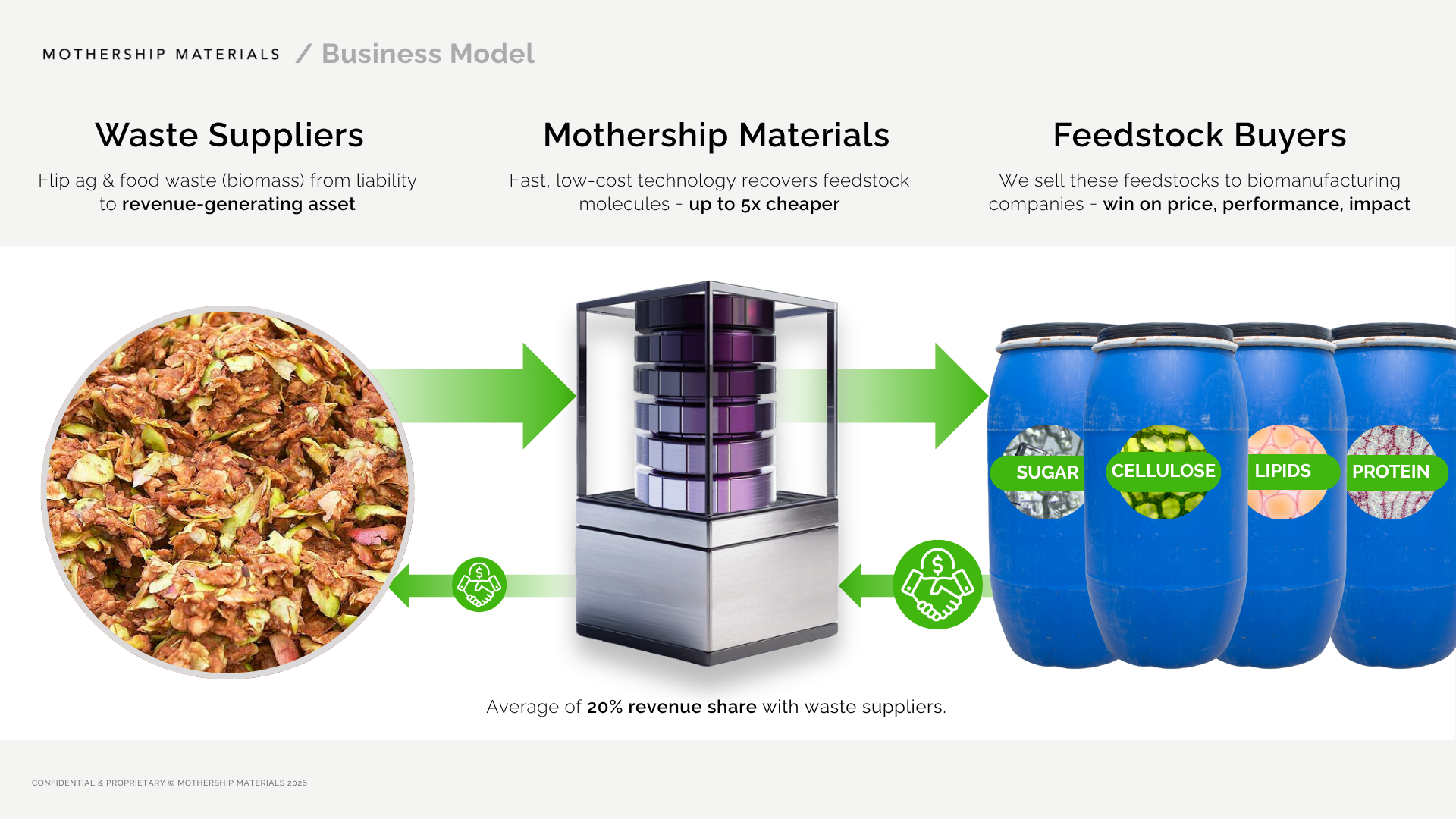
Mothership Materials recovers 2nd generation biomaterials from food and agricultural waste using a proprietary mechanism and process that is similar to fractional distillation in the fossil fuel industry. This process recovers and sorts different biomaterials and biochemicals from the waste that serves as Mothership Materials' feedstock. The biomaterials produced by Mothership Materials serve as high-value feedstock for businesses in industries such as food, beauty & cosmetics, textiles, and pharmaceuticals, to name a few.
For example; Mothership Materials' process can recover Essential Oils, Cellulose, and Pectin from the millions of tons of orange juice waste produced annually. Essential Oils are used in Beauty & Cosmetics, and Household Cleaning Products; Cellulose is used in Textiles and Packaging, and; Pectin is used in Food, and Pharmaceuticals.
Mothership Materials provides a domestic source for specialized biomaterials inputs that often require custom molecular precision and tuning during the manufacturing process. The team has demonstrated the capacity to accomplish this at lab scale, and has designed a machine and equipment that can be built and deployed anywhere in the world. Initial focus is on the United States.
Targeted Molecule Recovery (TMR): A “Coinsorter for Molecules”
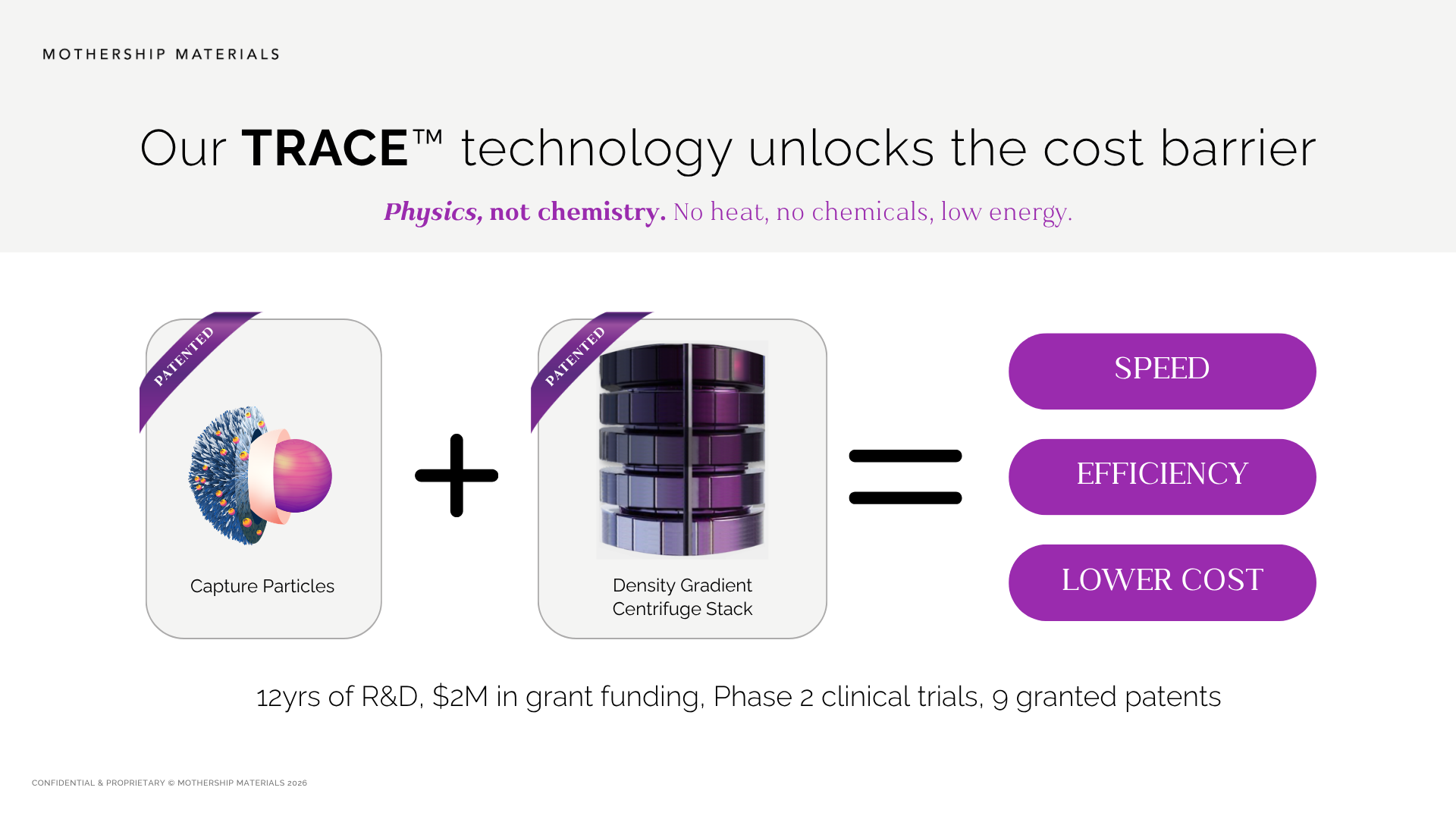
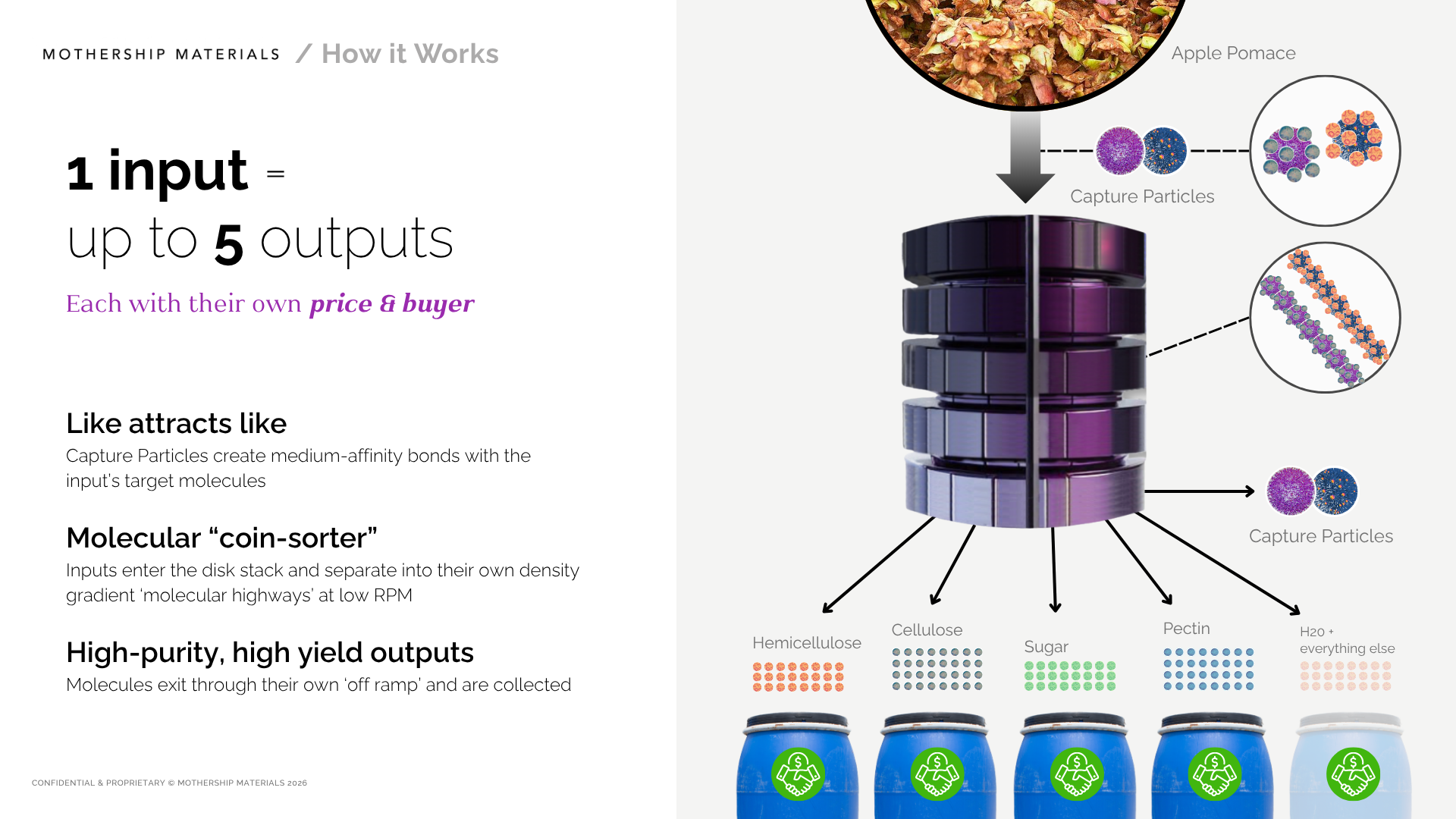
Mothership Materials has developed a proprietary bioreactor that pre-treats liquified biomass with sound waves, then introduces patented Capture Particles that sort target molecules for recovery in a density gradient field, with each target molecule captured through a separate output channel.
Initially developed for separating the molecules and cells found in blood as a means of treating sickle-cell anemia in Ghana, Mothership Materials’ patented TRACE™ platform is modular, and can be deployed to form distributed or decentralized physical infrastructure networks. The process of sorting target molecules from an input of liquified biomass is called Targeted Molecular Recovery.
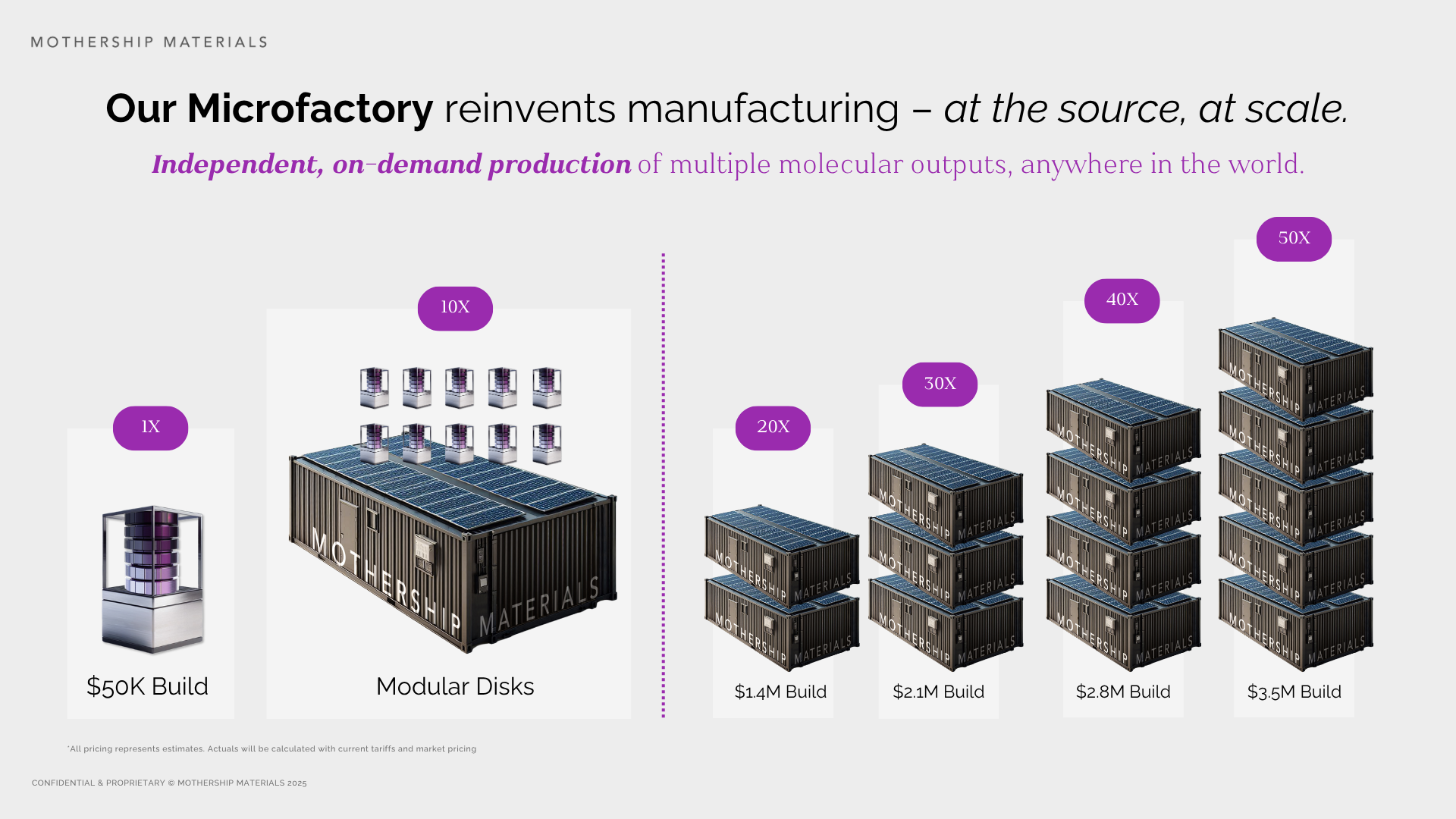
A single TRACE™ tower costs about $50,000 to build and can process about 20 tons of biomass per hour in order to extract the high value components within the biomass. These outputs can then be sold as feedstock to other customers. A full microfactory comes in at less than $250,000 and can be paid-back in less than a month when operated at full capacity.
Mothership Materials can extract up to 5 unique outputs from a single input of liquid biomass. Each TRACE™ tower can run on solar power, and is designed to minimize energy consumption.
Customer Applications: Fueling Precision Fermentation, Bioplastics, Upcycled Textiles, and More
The team at Mothership Materials has made a lot of progress since our investment in Q1 2025. Among other things, Mothership Materials reports the following progress with respect to customer development.
Indonesia: Beauty Brand
Mothership Materials has deployed a pilot TRACE™ Scout microfactory in Indonesia for its first customer, an indie beauty company, to recover cellulose and lipids from agricultural processing waste streams. The recovered materials are integrated into finished products currently sold in US and Asian markets. This pilot validates Mothership’s ability to operate equipment in non-US regulatory environments and demonstrates successful product integration across consumer-facing brands, while generating revenue from recovered feedstocks.
Global Brewer Partnership
Mothership has a paid multi-year offtake agreement with the world's largest brewer to supply glucose, lipids, and proteins recovered from their brewers' spent grain (BSG). Mothership’s glucose product, branded Microbe Munch, is optimized specifically for precision fermentation microbes and achieves DE95 purity, the most useful specification for microbial fermentation. The Dextrose Equivalent (DE) is a measure of the degree of conversion of pure starch to pure dextrose, dextrose being another name for glucose. Raw, unprocessed starch has a DE of almost 0 and dextrose has a DE of 100. This means that Microbe Munch has a DE of 95% on the DE scale, and is highly bioavailable
Upon launch of Mothership’s industrial microfactory, the team expects to bring Microbe Munch to market at 20% below commodity glucose pricing while maintaining unit economics that support up to 80% gross margins.
Microbe Munch Buyer Pipeline
Mothership Materials reports a $50,000,000 inbound pipeline for Microbe Munch from biomaterials producers across four continents. Currently, Mothership is manufacturing kilo-scale quantities using its own pilot unit. The team plans a commercial launch to start fulfilling scale-appropriate contracts in Q3 2026.
Bamboo Remediation & Textile Supply Chain, Global Offtake Agreements
Mothership Materials has signed global offtake agreements with its first textile partner already producing fibers and selling into the market for over a decade. Mothership has achieved ultra-high-purity cellulose from bamboo waste that serves as a direct drop-in replacement for their current fiber partners and matches the performance specifications of their current solution, which costs 30% above commodity cotton pricing; Mothership is positioned to deliver at 30% below commodity cotton pricing. This positions Mothership as a distributed feedstock supplier for the global textile industry while solving regional environmental challenges.
Industrial-Scale Deployment – Q3 2026
Mothership’s first commercial microfactory will go live in early Q3 2026 at their anchor customer (world's largest brewer). The unit is designed for modular scaling: Mothership can swap out processing components to move from 1 tonne to 5 tonnes to 20 tonnes capacity without rebuilding infrastructure. This step-and-repeat model enables rapid geographic expansion and customer deployment without capital-intensive facility builds.
Meet the Team: A 4x Founder and a Chemical Physicist Walk Into a Lab
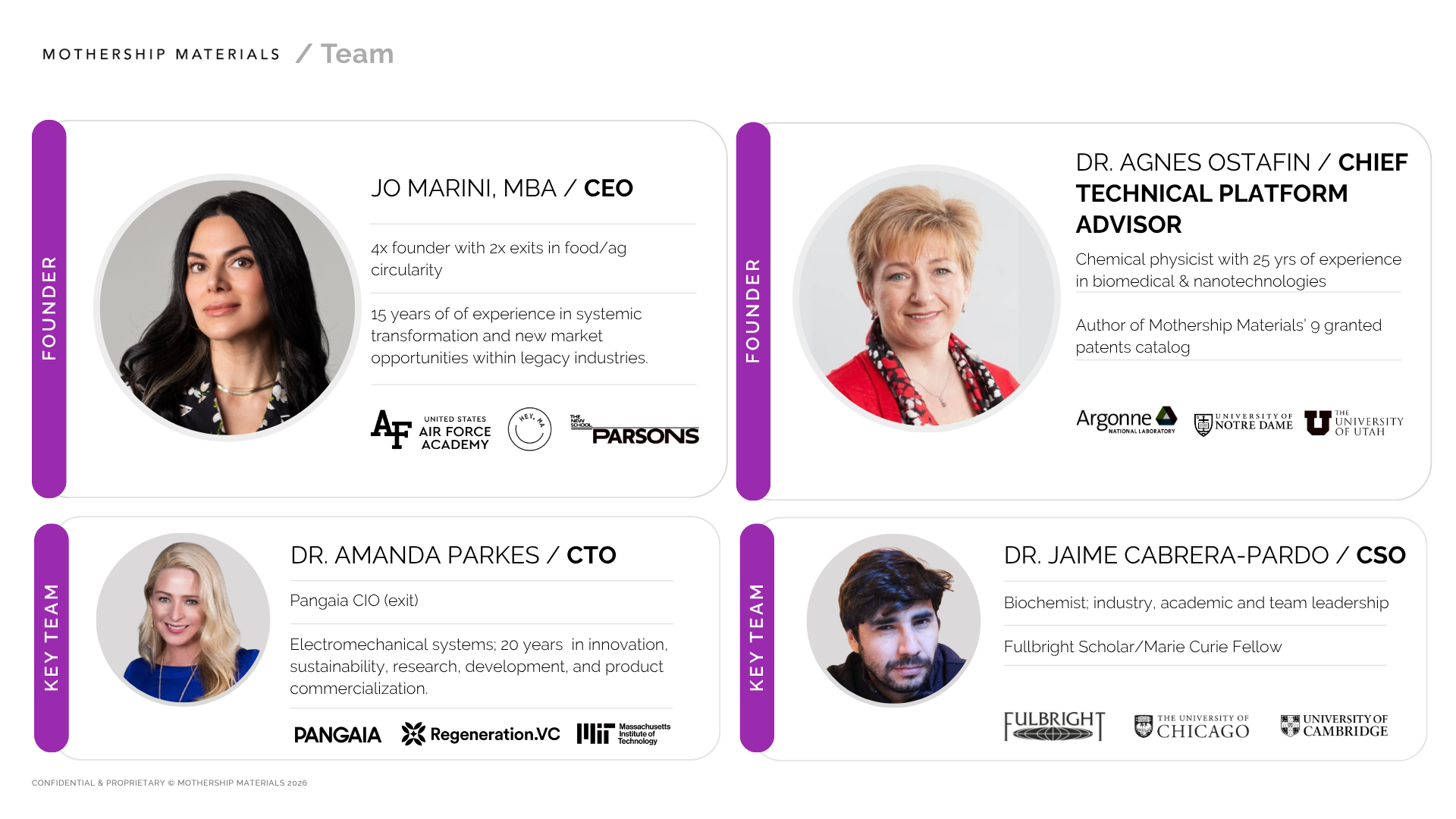
Mothership Materials was founded in 2022 by Jo Marini and Agnes Ostafin, Ph.D.
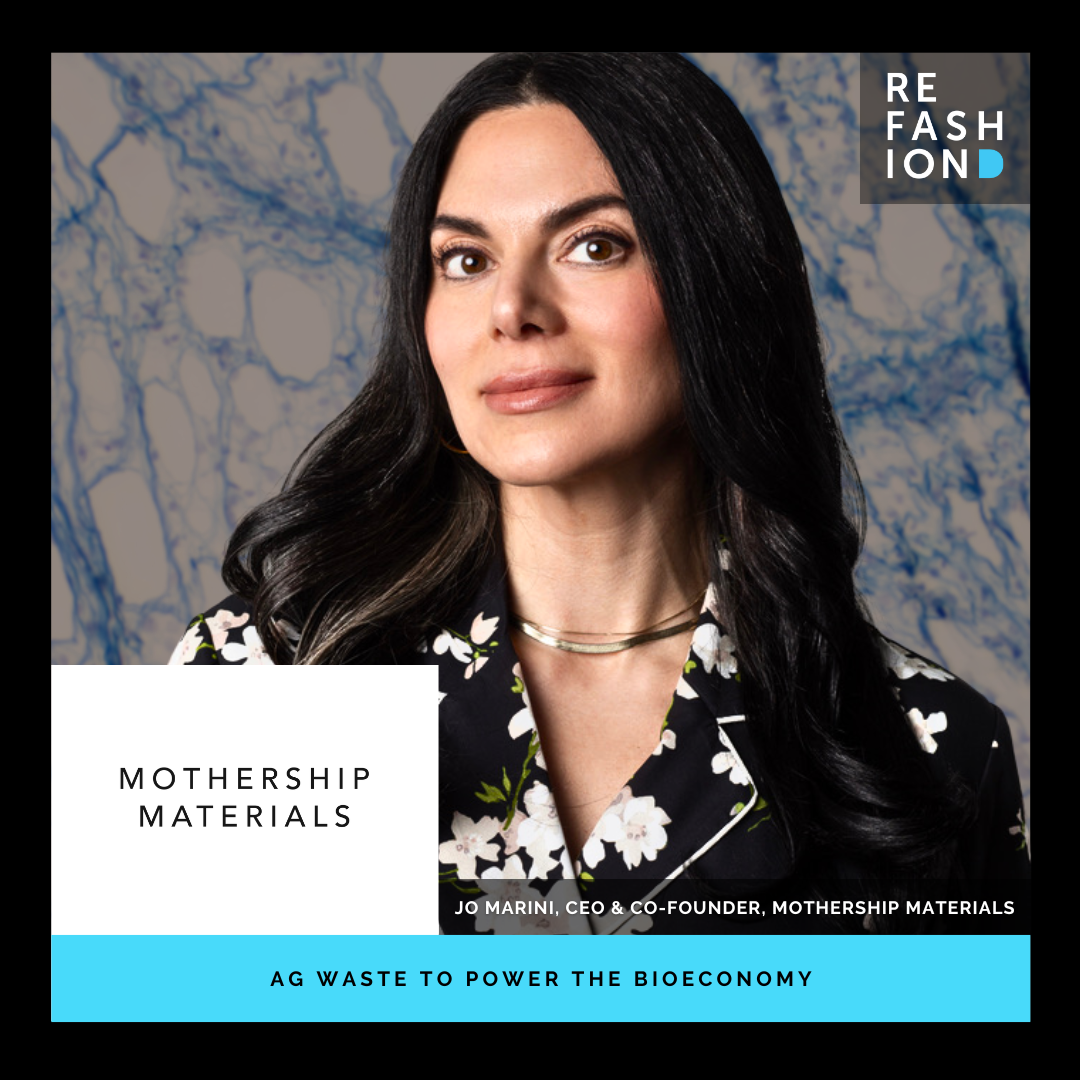
Jo Marini serves as Chief Executive Officer. Before founding Mothership Materials with Agnes, she built: The Local Colorado - Southern Colorado’s first, modern, zero-waste food truck and day restaurants; Mother Superior - a venture impact foundry for startup founders who fall outside the margins of traditional venture capital, and; REYN - a beauty and cosmetics brand that develops bio-adaptive formulations that simplify skincare for all skin types.
Jo is a graduate of the United States Air Force Academy, with a bachelor’s of science in behavioral sciences. She holds a master’s of arts in sociology from University of Colorado at Colorado Springs, and a master’s of business administration from California College of the Arts, with a concentration in design strategy. She is also a certified permaculture designer of regenerative natural systems, with a certification from the Central Rocky Mountain Permaculture Institute. For the past 6 years, Jo has taught Venture Studio in the MBA in Design Strategy program at California College of the Arts, the capstone course focused on turning world-changing ideas into resilient companies.
Agnes Ostafin, Ph.D, serves as Chief Technical Platform Advisor. She holds a bachelor’s of science in chemistry, biological sciences, and biophysics from Wayne State University. She earned her Ph.D in Chemical Physics from the University of Minnesota, and also earned a master’s of science degree in engineering management from Drexel University. Agnes was a postdoctoral researcher at Argonne National Laboratory, and the University of Chicago respectively. She subsequently served as Assistant Professor and Group Leader at the Nanoscale Bioengineering Laboratory in the Department of Chemical and Biomolecular Engineering at the University of Notre Dame. She was the Director of the Nanomaterials Center at the University of Utah NanoInstitute, and currently serves as a Research Associate Professor in the Department of Chemical Engineering and Managing Director of the Center for NanoMaterials at the University of Utah NanoInstitute.
Agnes is the author or editor of more than 70 scientific manuscripts and textbook chapters, including the foundational book Nanoreactor Engineering for Life Sciences and Medicine.
In 2005, Agnes cofounded Nanoshell Company with Hisoshi Mizukami, Ph.D. This article profiling the 50 Leading Companies of the Year 2020 by The Silicon Review states: “Nanoshell Company specializes in the design, fabrication, characterization, and integration of functional nanomaterials into transformational products and systems. These include personal care products, textiles, polymers, and medicine.”
Jo met Agnes while seeking out a solution for a product REYN was developing. Having failed to find anyone else capable of solving the problem, Jo engaged Agnes in further conversations about some of the innovations Agnes had developed in the past. Those conversations eventually led them to the realization that the innovation Agnes had been developing as a potential treatment mechanism for treating sickle cell anemia in sub-saharan Africa could be repurposed to valorize liquified biomass waste streams. Those conversations eventually led to the formation of Mothership Materials.
Amanda Parkes, Ph.D, serves as Mothership Materials’ Chief Technology Officer. Amanda earned her bachelor’s of engineering in mechanical engineering from Stanford University, and her Ph.D from MIT Media Lab. Amanda’s experience spans a number of startups, academia, and public agencies. Notably she has served as Assistant Professor at Harvard University, and as an Adjunct Assistant Professor at Columbia University. She served as Chief of Technology and Research at Manufacture NY, and was Chief Innovation Officer at Future Tech Lab. She was the Chief Innovation Officer at PANGAIA, a direct-to-consumer materials science company. She’s currently also a Scientific advisor to Matereal, a startup developing biobased performance materials. She’s also an advisor to Regeneration.VC
Jaime Cabrera-Pardo, Ph.D, joined Mothership Materials earlier this year and succeeds Agnes as Chief Scientific Officer. Jaime earned his bachelor’s of science in biochemistry from Universidad de Concepción in Chile, and his Ph.D in organic chemistry from the University of Chicago as a Fulbright Fellow. He then pursued post-doctoral research at Cambridge University as a Marie Curie Fellow. Building on his prior experience, Jaime brings a professional background that marries the theoretical rigor of academia with the realities of turning academic theory into practical industrial applications. At Mothership Materials his responsibilities encompass using his “expertise in bioprocessing and analytical chemistry to build the scientific foundations that make the bioeconomy economically inevitable.”
Why Innovations in Bioeconomy Supply Chains Matter
In Proximity: How Coming Breakthroughs in Just-in-Time Transform Business, Society, and Daily Life, the authors Robert Wolcott and Kaihan Krippendorff argue that business models that move the point of production closer to the end customer will result in transformations across different industries, with important implications for supply chain resiliency and sustainability, among other things.
The authors of Integrating bio-hubs in biomass supply chains: Insights from a systematic literature review state, “Biomass sources are geographically scattered, and seasonal changes influence their availability. Variations in location, type, and feedstock quality impose logistical and storage challenges. Such a dispersion and variety of biomass sources, as well as the dispersion of demand points, may undermine the economies of scale and increase the risk of supply shortage. By consolidating biomass preprocessing and distribution activities in bio-hub facilities, they can contribute to the overall resilience of biomass supply chains (BSCs) and ensure a more sustainable and cost-efficient approach to bioenergy production.”
Innovations like the one Mothership Materials has developed address that concern directly by processing biomass at the edge. For example, now 2nd generation feedstocks such as those Mothership Materials produces for its customers can be produced in close proximity to the points of production of biomass before being transported wherever the customer needs them. Mothership’s microfactories and business model also address many of the issues raised by panelists during Feedstocks of the Future for a Circular U.S. Bioeconomy in June 2023, as noted previously in this article.
We are #ObsessivelyEnthusiastic
As we say at REFASHIOND Ventures, we are #ObsessivelyEnthusiastic about what the team at Mothership Materials is building.
REFASHIOND Ventures: The Industrial Transformation Fund invests in early stage startups refashioning legacy industries through Data & AI, Advanced Materials, Advanced Manufacturing, & Next Generation Supply Chains; Defensible through economic moats.
At scale. Mothership Materials will sit at the intersection of all our investment categories. We are excited to see how things unfold as time progresses.
If you are a startup founder who believes that what you are building fits our thesis, please fill out our data-intake form. We review submissions on Mondays, Tuesdays, Wednesdays, and Thursdays during our team meetings, and we reach out to the startups from whom we would like more information.
At most venture capital firms, early-stage Industrial Transformation & Supply Chain Technology is a tiny, emerging “area of interest” . . . At REFASHIOND Ventures, it’s our entire world. Startup founders can learn more by reading the For Founders section of our website.
Updates
Update #1: Updated images, fixed formatting errors and made other minor edits. (May 26, 2026, 6:00 pm ET)
Update #2: Added Team Graphic (May 27, 2026, 4:00 AM ET)
Update #3: Added Statement on The Use of Generative-AI and AI-Assisted Technologies. (May 27, 2026, 9:00 am ET)